UFC Co-Main Event Upset Rates and Underdog Odds
 Available in US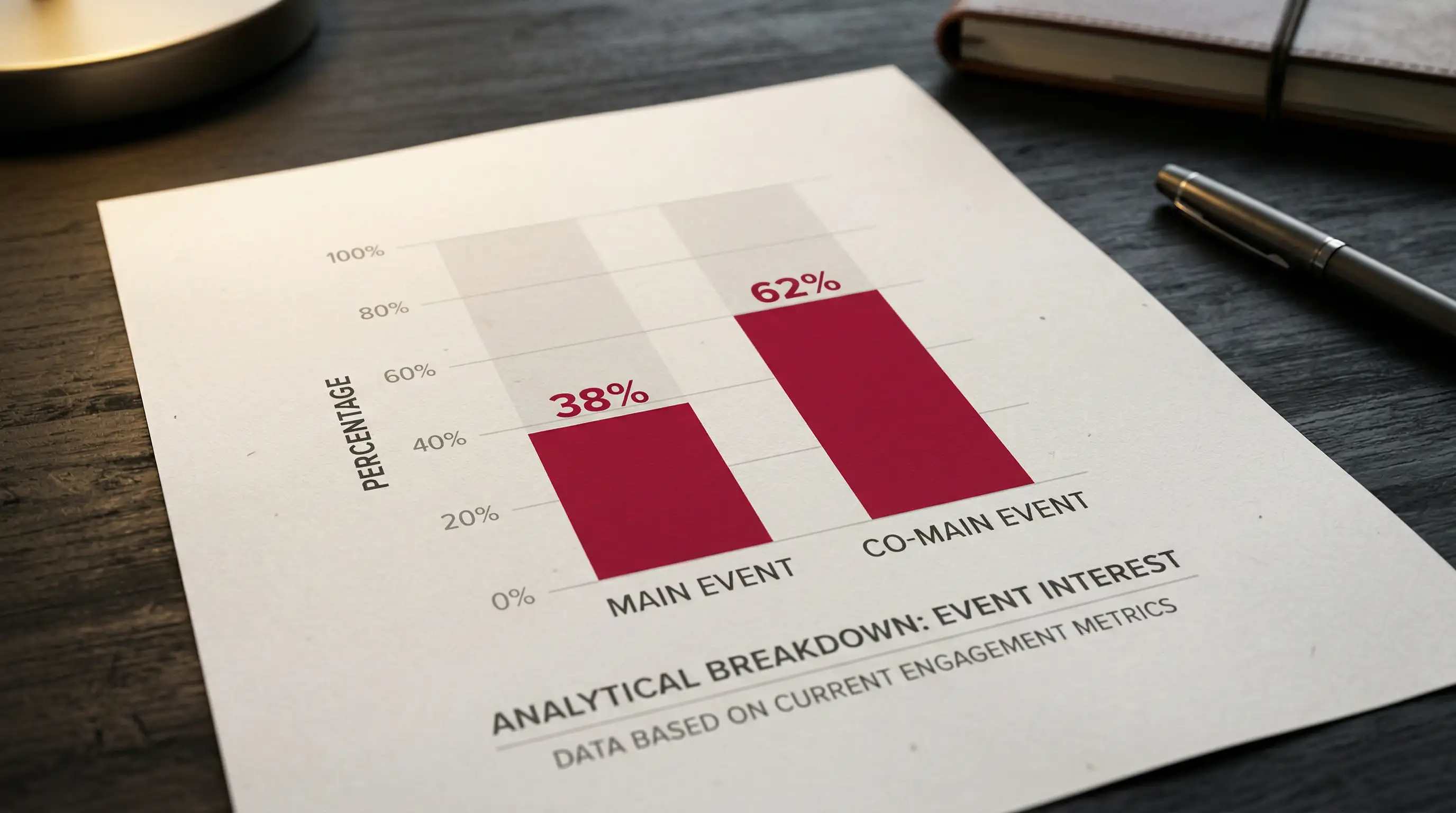
Targeting Underdog Odds Through UFC Co-Main Event Upset Rates
I taped a printout of one number to the inside of my notebook four years ago. Forty per cent. That is the upset rate on UFC co-main events — the fights that slot second-from-last on any Fight Night or PPV card. Main events upset at 23%. Co-mains upset at 40%. The gap is nearly double, and it has held stable across the decade of fight data that FightMetric and MMAOddsBreaker have aggregated. Every time I sit down to price a UFC card, that number is the first thing that shapes how I allocate stakes.
Most UK bettors treat co-mains the same way they treat main events — a favourite to back, a few props to sprinkle on, a bet builder if the operator’s offering one. That treatment produces worse long-term returns than any single other habit I see on this sport. Co-mains are not main events that happen to be on earlier. They are structurally different fights, priced with less analytical attention, watched under different conditions, and won by underdogs at a rate that rewards anyone willing to restructure their slip around the distinction.
This article digs into where the 40% figure comes from, why co-mains go sideways more often than mains, and how to turn the pattern into UK sportsbook positions that actually price for the variance. The broader market-pricing context sits in the companion piece on UFC odds and value betting; this piece is the specific case study that most cleanly demonstrates the thesis.
Where the 40% Figure Comes From
The headline number traces back to MMAOddsBreaker and FightMetric datasets covering UFC fights with clear favourite-underdog pricing structures — fights where one side was priced shorter than roughly 1.70 decimal. The aggregate distribution across all UFC fights shows roughly 30% of these bouts ending in upsets, where “upset” is defined as the underdog winning the moneyline. About 12% of fights are “pick ’em” bouts with essentially even pricing that do not fit neatly into the favourite/underdog analysis.
When the same dataset is cut by card position, the distribution fractures. Main events upset at 23%. Undercard fights cluster around 30% to 32%. Co-main events hit 40%. The gap is too large to be statistical noise — the sample size is thousands of fights across the relevant time period — and it has been stable enough across different slicing methods that the pattern is widely treated as real by professional MMA analysts.
A sanity check. UFC favourites overall win approximately 72% of fights, which means underdogs take roughly 28% to 30% of all UFC bouts. The co-main 40% figure is notably above that baseline; the main-event 23% is notably below. What that means mechanically is that the probability of any given UFC underdog winning depends materially on whether the fight is a main event or a co-main, and the direction of the dependency is the opposite of what intuition suggests. You would expect bigger fights — main events — to carry more upsets because of higher stakes and fatigue from five-round cardio demands. The data says the reverse.
One more observational note. The corner-assignment academic literature — specifically the Carnegie Mellon capstone analysis of 6,478 UFC fights — found red-corner fighters historically winning 55% to 65% of bouts, with the gap narrowing since 2015 as divisional parity has grown. The corner-bias effect is a separate structural variable that cuts across card position, and I cover its evolution in the piece on how real red-corner bias is in 2026. The two effects stack in some cases — a blue-corner co-main underdog has historically been a genuine value position — but the corner effect has weakened while the co-main effect has not.
Why Co-Main Events Go Sideways More Often
The explanation is a combination of structural, psychological and bookmaking factors that all push the same direction. Start with the bookmaking side because it explains the pricing asymmetry that creates the opportunity in the first place.
UK books devote trading attention asymmetrically. Main-event lines get sharp analytical work because they attract the largest volume of bets and because main-event mispricings cost the operator the most. Co-main lines get less attention, partly because the volume is lower and partly because the co-main fighters are often less analytically established. The result is opening prices that reflect a quicker heuristic rather than a full model. Money flows in, the line adjusts based on that money rather than new information, and closing prices on co-main underdogs end up sitting further from their true win probability than main-event lines do.
Fighter-psychology factors compound. Co-main fighters are usually on the verge of main-event status — ranked well, with recent good performances — but without the cemented profile that main-eventers carry. That positioning creates matchups where the favourite is often a fighter trying to prove they belong in the top tier, and the underdog is a fighter with something to lose by accepting the matchup. Fighters in the former category sometimes over-reach; fighters in the latter sometimes deliver performances above their apparent level. The style clashes involved produce upsets at a rate higher than either fighter’s individual profile would predict.
A fight-industry voice captured the generalisable version of this effect in commentary on a result-heavy betting week: “Obviously, for bookmakers, it was a Cheltenham to remember. It’s very rare that so many well fancied shots get beaten, so there was definitely no moaning from our side.” The quote was about racing, but the dynamic applies: when several favourites lose on a card, bookmakers make money on the volume concentrated on those favourites. The co-main upset rate is the UFC equivalent of that phenomenon playing out in slow motion across a decade of fight data.
Preparation asymmetries also play in. Main-event fighters get full camps with known opponents and predictable fight weeks. Co-main fighters more frequently take the slot as step-up opportunities, step-down consolations, or replacement bookings after main-event casualties. Short-notice co-mains produce particularly volatile results, and a short-notice co-main underdog is one of the specific archetypes where the 40% upset rate understates the actual probability of the apparent underdog winning.
Main Events: 23% Upset Rate and Why
The inverse side of the story is worth understanding because it reinforces why co-mains are the betting target. Main events upset at 23% — below the all-fight average of roughly 30% — for reasons that match the co-main story’s inverse.
Main-event lines are priced more carefully because the stakes are higher for the book. Trading desks allocate their sharpest work to main-event moneylines, and the resulting opening prices sit closer to true probability distributions. Money flowing in then pushes the line in efficient directions, and closing prices track neutral analytical projections more tightly than any other card position does. The UFC’s 72% overall favourite win rate sits in line with implied probabilities at main-event level, and the 23% main-event upset rate is the headline evidence of that pricing efficiency.
Main-event fighters also have more predictable profiles. The top of each UFC weight class is a small sample of fighters whose fight histories are extensively documented, whose styles have been analysed by every major MMA media outlet, and whose coaching teams, training camps and recovery patterns are largely public. That informational density closes pricing gaps. The book has the same data the sharpest bettor has, and neither has a significant analytical edge over the other.
Five-round main events also favour the better-conditioned fighter, who is almost always the favourite. Underdogs who might have landed a first-round upset in a three-round fight have to survive longer to win against a five-round stamina gap that usually breaks their way late. That cardio-compounded-with-skill effect keeps main-event upset rates lower than three-round fights at lower card positions would predict.
Where the Value Sits for UK Bettors
The practical translation is straightforward but requires discipline to act on consistently.
Co-main underdogs at moneyline prices of 2.20 to 3.50 are the specific range where the 40% upset rate most cleanly produces positive expected value. A 2.50 underdog implies a 40% break-even probability; the structural upset rate for co-mains is roughly 40%; the match is essentially at the margin before any fighter-specific analysis. Any fighter-specific angle that pushes the true probability above 40% generates positive edge, and even fighters priced without specific angles in their favour hit the 40% break-even with reasonable regularity.
The portfolio approach dominates single-bet plays. Staking 1% of bankroll on every UFC co-main underdog priced between 2.20 and 3.50 across a calendar year produces a distribution with high variance but consistently positive expected value over meaningful sample sizes. Picking and choosing among co-main underdogs based on gut feel underperforms the mechanical approach because the edge is structural, not individual-fight-specific. The mechanical approach is where the maths lives.
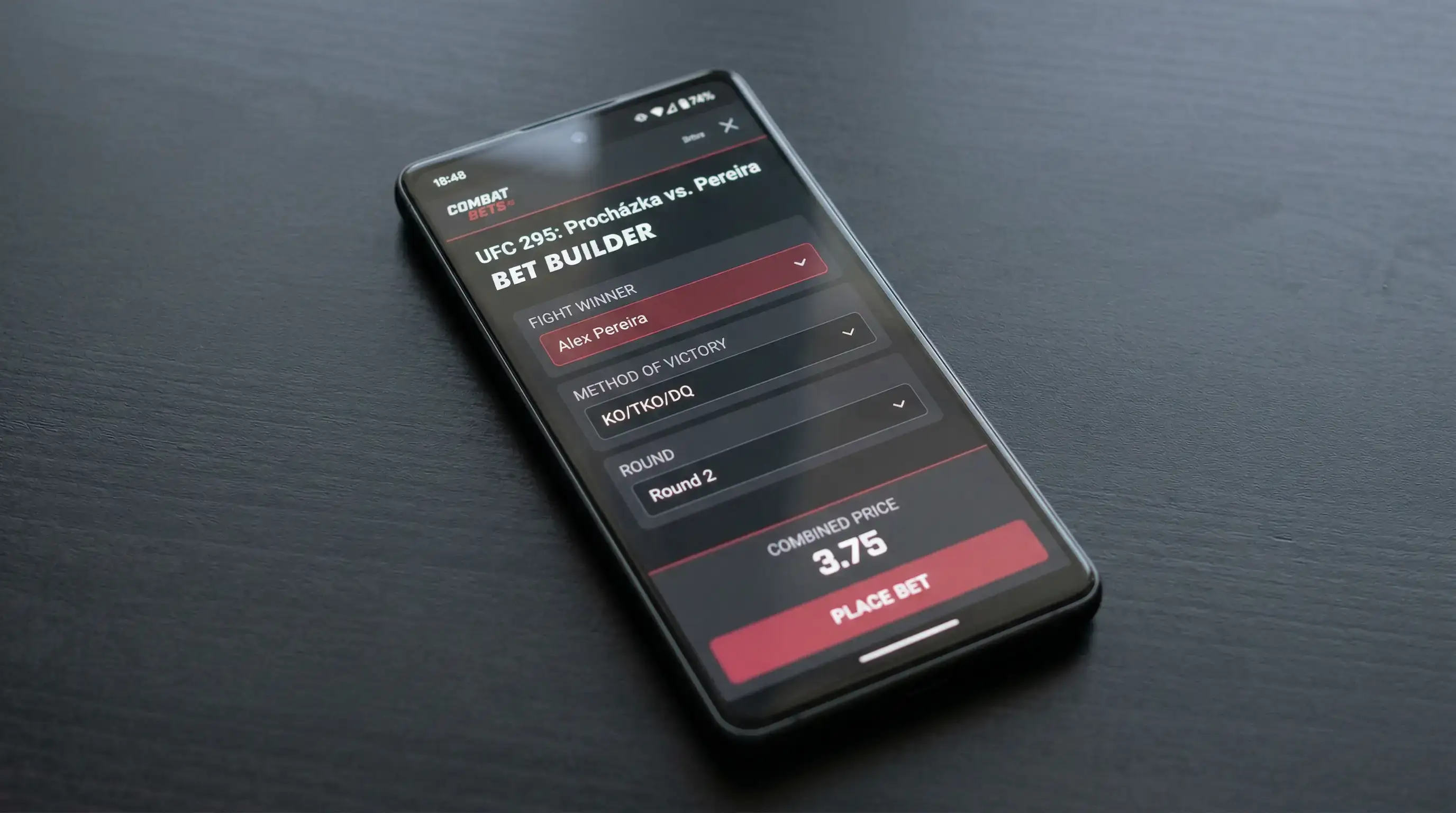
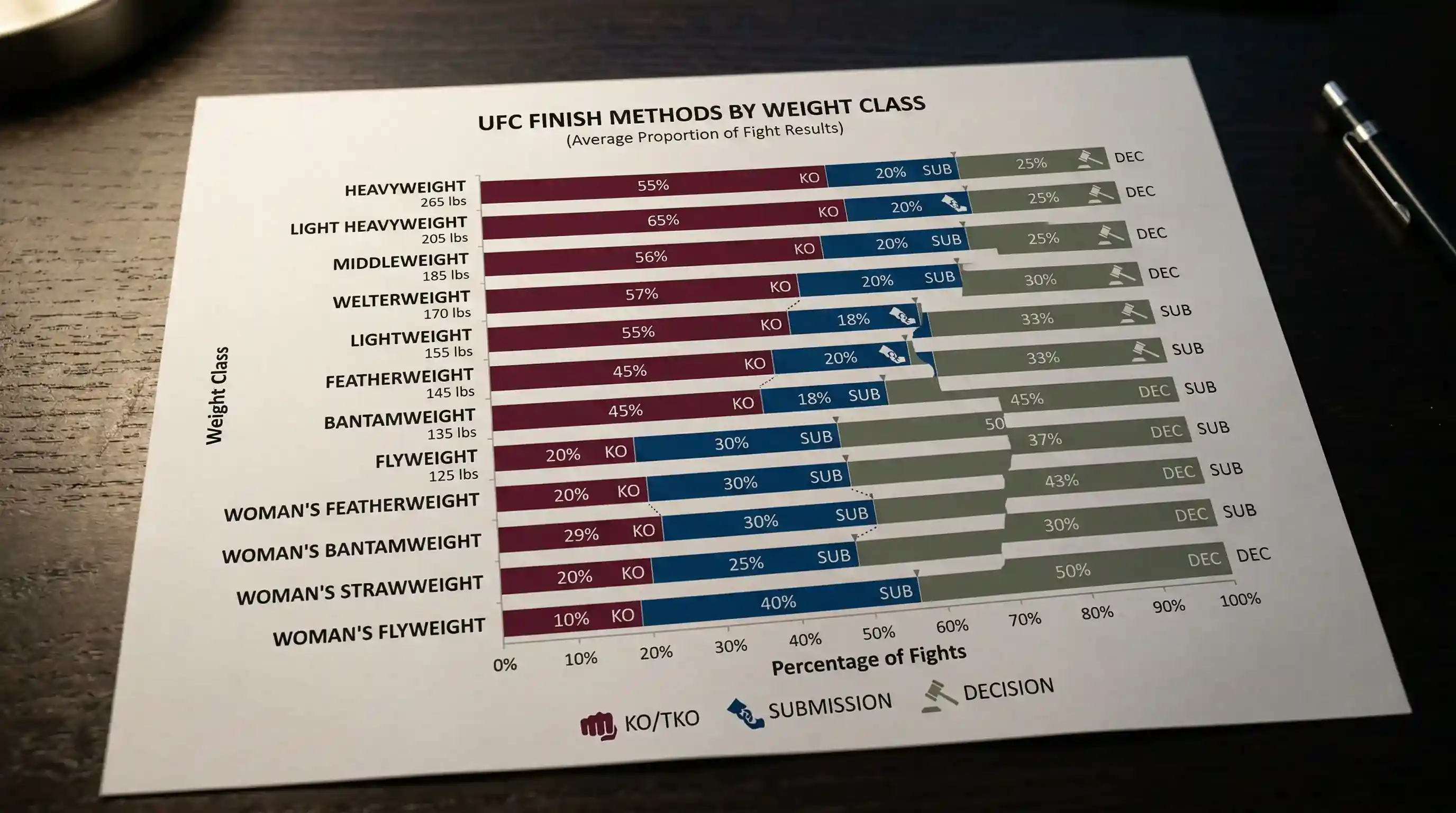
Method-of-victory derivatives on co-main underdogs add another layer. If a co-main underdog is priced 3.00 to win and 7.50 to win by KO/TKO, the implied finishing probability within the underdog win is 40% — and fighters winning as underdogs in UFC co-mains finish at rates closer to 55% to 60%, because the path to an underdog win more often requires damage rather than point-scoring. The finish derivatives on co-main underdogs are systematically underpriced relative to the moneyline, and that is a second-order value position that compounds with the first.
Main-event underdogs need more fighter-specific work to justify stakes. The 23% baseline implies pricing closer to fair, and the mechanical approach does not work the same way it does at co-main level. What works on main events is matchup-specific analytical work on fighters whose style clashes or recent fight history suggest the book has mispriced a specific bout. That is harder, more time-intensive, and less systematically profitable — but the main-event stake sizes can be larger when the case is clear.
One final framing. UK retail money concentrates on co-main favourites because those are the names at the top of casual awareness — fighters with enough profile to attract attention but not enough profile to be priced with main-event efficiency. That concentration is what keeps the 40% upset rate producing pricing gaps year after year. The day the retail pattern breaks, the gap will close. Until then, the 40% number on the inside of my notebook is still earning its space.
Does the UFC co-main upset rate hold across Fight Night cards as well as PPVs?
Yes, essentially the same rate applies. The 40% figure aggregates co-main events from both PPV and Fight Night cards without a meaningful split in the underlying data. Fight Night co-mains may actually show a slightly higher upset rate because matchmaking often involves step-up bookings with bigger stylistic mismatches than PPV co-mains, but the difference is within noise across reasonable sample sizes.
How should a UK bettor size stakes on a co-main underdog differently from a main-event underdog?
Co-main underdogs within the 2.20 to 3.50 moneyline range can be staked mechanically as a portfolio position, typically at 1% of bankroll per bet, because the structural 40% upset rate supports that approach over reasonable samples. Main-event underdogs require fighter-specific analytical justification before stakes exceed 0.5% of bankroll, because the 23% baseline is priced too efficiently to support a blanket mechanical approach.
Created by the ”mma Betting Online” editorial team.