UKGC Licence Verification for MMA Betting Sites
 Available in US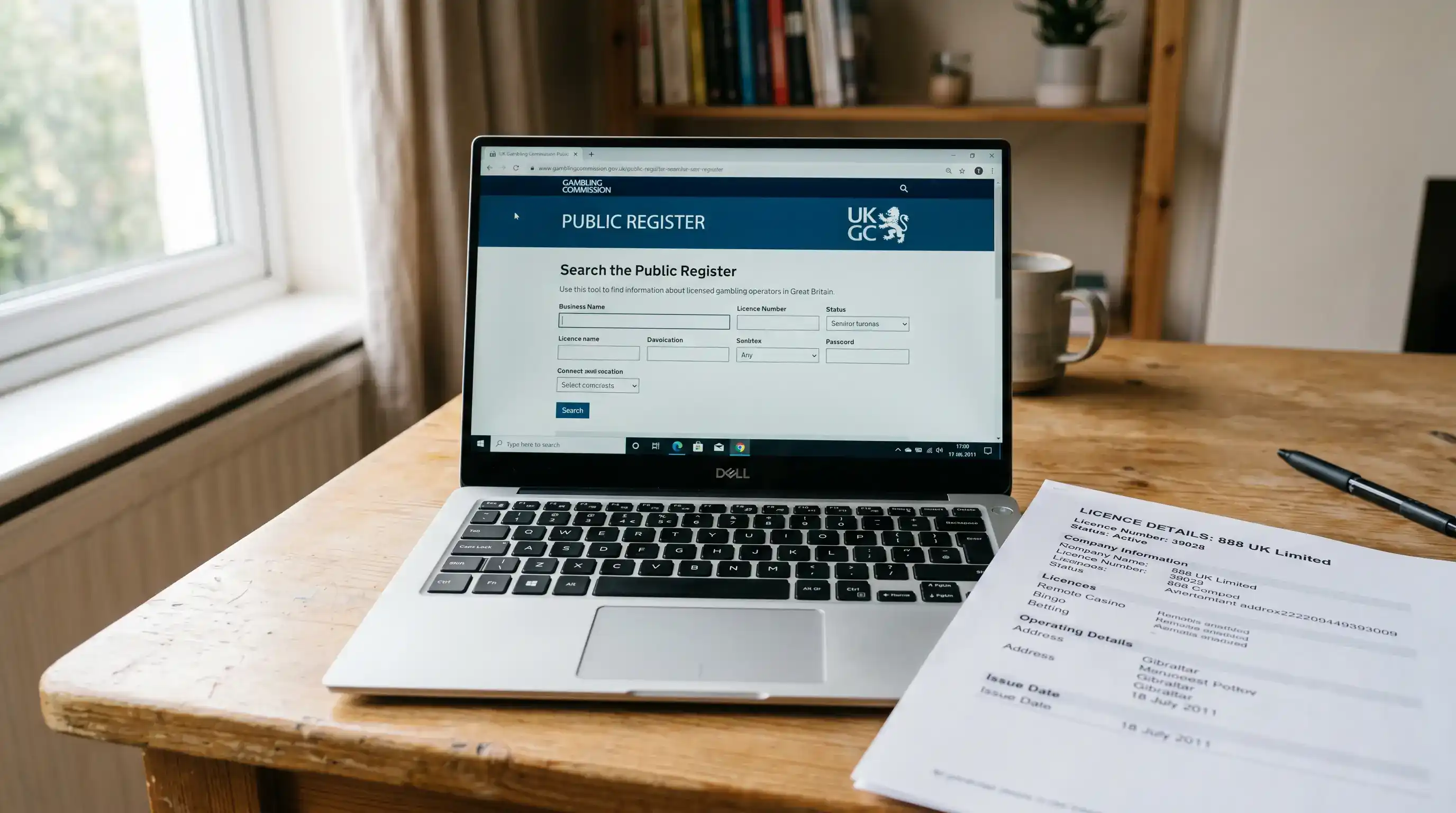
Using the Public Register for a UKGC Licence Check
A reader emailed me in January with a slightly embarrassed confession. He had deposited £400 across two sites he found through a YouTube review, lost about half, and then realised he could not find either operator on the UKGC register. Both were Curaçao-licensed shells with British-facing landing pages. The money was gone; the complaints route did not exist. Sixty seconds of public-register work at the start would have saved him the lot.
The UK has 2,179 licensed gambling operators on the UKGC register as of the most recent snapshot, a number that has fallen 3.7% year on year as the commission has tightened its standards. That filter does real work. An operator on the register has cleared background checks on its directors, posted player-funds protection, committed to the Licence Conditions and Codes of Practice — everyone calls them the LCCP — and agreed to submit to binding alternative dispute resolution. An operator not on the register has agreed to none of that, regardless of how slick its app looks.
The check takes about a minute once you know where to look. It is free, public, and it is the single highest-value thing a new UK MMA bettor can do before depositing a penny. The rest of this article walks you through exactly how to do it, what a clean licence entry looks like, what red flags actually matter, and what to do if you have already put money somewhere dubious.
Using the UKGC Public Register
The commission’s public register lives on the official gambleaware-adjacent infrastructure at gamblingcommission.gov.uk. You search by operator name or, better, by account number. Every UK-licensed operator has a unique account number and one or more licence numbers, and both should appear somewhere in the footer of the bookmaker’s website alongside an 18+ symbol. If you cannot find them in the footer after scrolling slowly, that is already a problem — licensed operators are required to display the information accessibly.
Copy the account number into the register search. A legitimate result brings back a page showing the legal entity name (which is often different from the customer-facing brand), the trading names it is authorised to use, the licence status — typically “Licence held” for an active operator — the licence type, the activities permitted, and the date the licence was granted. The trading name check is the one most people skip and it is the one that catches the most impersonation attempts. If the footer says “TotallyLegitBet” but the licence is held by “Real Bookmaker Group Limited” and the trading names listed do not include TotallyLegitBet, you are not looking at a UK-licensed site. You are looking at a clone.
One detail the register page includes but most bettors ignore: the licensed activities. An operator can hold a remote casino licence without a remote betting licence, which means it is legally authorised to run slots and table games but not to accept sports bets from UK customers. For MMA purposes you want to see “Remote general betting standard” or “Remote general betting limited” in the activities list. Without that line, the operator cannot legally take your UFC wager regardless of what the homepage claims.
Cross-check the domain itself. The register shows domain names each operator has registered as part of its licensed estate. If the site you are about to deposit on is not in that list, you may be on a scam domain that is mimicking a legitimate brand — this has become a steady problem with William Hill and Bet365 lookalikes targeting UK search traffic. Two UK operators, William Hill and Bet365, together hold over 50% of UK sports-betting PPC click share in the current market, which makes them the most-cloned brands by a wide margin. The domain line in the register is your defence.
What Licence Conditions Actually Look Like
A UKGC licence is not a single document. It is a set of continuing obligations bundled into the LCCP, and every licensed operator has signed up to honour them in full. Skim-reading the LCCP will not turn you into a compliance lawyer, but five conditions matter directly to MMA bettors and seeing evidence of them on a site is your second-layer sanity check.
Age and identity verification must complete before the first deposit, not after the first withdrawal. If a site takes your card number and lets you start betting without any KYC friction, that is not a generous onboarding experience; it is a breach. Fair-play terms must be clear and available. Complaint processes must be visible and lead to an approved alternative dispute resolution provider — IBAS is the most common one for British sportsbooks. Promotional terms cannot include misleading language about “free” money, and wagering requirements must be in plain English. Player funds must be separated from operational funds with a stated level of protection, which appears in the terms under a heading along the lines of “protection of customer funds”.
The director of the industry lobby group put the scale of the regulated UK market into perspective last autumn, noting that “each month, 22.5 million people in the UK enjoy a bet… the latest NHS Health Survey for England shows that just 0.4% of adults are problem gamblers.” Whatever you think of the politics, the line stands: regulated British betting is a genuinely large, genuinely functional consumer market, and the LCCP is the reason you can walk into that market as a retail customer with reasonable confidence.
The licence also commits the operator to the new 2025 rulebook — the 31 October deposit-limit prompt, the light-touch financial vulnerability check triggered above £150 net monthly deposit, and the 6 April 2025 statutory levy of 1.1% of GGY that funds research, prevention and treatment. If you deposit on a site that does not surface a deposit-limit prompt before your first transaction, it is not a UK-licensed site. The prompt is legally mandatory and the commission has been pulling up operators for skipping it since day one.
Red Flags That Mean a Site Is Not UK-Licensed
I keep a mental checklist of red flags from ten years of reviewing operator pages. Any single one of these is a strong signal; two together is the end of the conversation.
The footer carries no UKGC account number, no UK licence number, and no 18+ branding. Instead it shows a Curaçao eGaming seal, a Kahnawake logo, or an Isle of Man Gambling Supervision Commission mark — the last of those is a legitimate licence for some purposes but does not authorise taking bets from UK residents. The deposit options include only crypto, with no UK debit card, no PayPal, no bank transfer. Marketing copy actively promotes “no KYC”, “anonymous betting”, “crypto-first deposits”, or explicitly flags that the site is “not on GAMSTOP”. That last one is the biggest single tell, because the only reason to advertise being off GAMSTOP is to serve self-excluded UK residents, which is the one customer base a site can only acquire by operating outside the UK framework.
Welcome bonuses that look too generous. A 200% matched deposit with a £5,000 cap is not a UK sportsbook; UK LCCP rules constrain marketing language and matched-bet structures, and genuine UK bonuses in 2026 rarely exceed £30 to £50 in matched free bets. A geotargeting pattern where the homepage greets UK visitors in pounds sterling but the terms and conditions reference a foreign jurisdiction is another classic tell. I have seen sites change currency display based on IP while keeping all regulatory language pointing at Curaçao.
The broader population of UK online gamblers is now around 13.5 million active accounts across all regulated operators, wagering 23.4 billion individual bets or spins per quarter. That is a mature, tightly supervised ecosystem with genuine brand competition. You do not need to step outside it for better prices; exchange liquidity and promotional competition inside the licensed estate covers every use case a British MMA bettor has.
If You Have Already Deposited on an Unlicensed Site
This is the conversation I have with at least a dozen readers a year and it is never pleasant. You have put money on an operator you now realise is not UK-licensed. What next?
Withdraw whatever you can, immediately, before anything else. Do not wait for a welcome bonus to clear, do not wait for a pending bet to settle, do not wait for the “friendlier” odds on Saturday’s card. Get the funds off the platform in the largest chunk the withdrawal limits allow. Offshore operators routinely freeze accounts during withdrawal processing and demand additional verification they would never have required during deposit — this is a known retention tactic and the commission sees it in the complaints that cross its desk from out-of-remit casework.
If a withdrawal is refused or frozen, escalate through your payment provider rather than through the operator. UK debit-card chargebacks can work for unauthorised gambling transactions under certain circumstances, and your bank’s fraud team will take the case seriously if you can produce evidence that the operator is not UK-licensed. For crypto deposits the chargeback route does not exist, and that is the one scenario where recovery is effectively impossible. This is why “crypto-only” is the biggest operational red flag in the deposit options list, not just a technology preference.
Report the operator to the UKGC even if it is outside the commission’s licensing remit. The commission maintains intelligence on unlicensed operators targeting UK consumers and its enforcement team works with payment processors and search engines to restrict access to the worst offenders. Your complaint contributes to that evidence base even if it cannot get your specific money back.
Finally, if the deposit was funded by credit card, note that the 2020 UK ban on credit-card deposits at gambling sites means your card issuer should have blocked the transaction in the first place at a legitimate UK operator. If it went through, that is additional evidence that the site was circumventing UK payment controls, which strengthens any dispute case. The broader picture of how UK payment methods interact with MMA betting is the subject of a separate piece worth reading if you want the full map of your options.
What does LCCP stand for and why does it matter for MMA bettors?
LCCP is the Licence Conditions and Codes of Practice, the rulebook every UKGC-licensed operator signs up to. It governs age verification, complaint handling, player-funds protection, marketing language and responsible-gambling tools. Compliance with LCCP is the difference between a regulated UK bookmaker and an offshore site offering similar-looking markets.
Can a UKGC-licensed brand legally market to UK residents from overseas?
Yes, provided it holds a current UKGC remote general betting licence and accepts UK bets under its British entity. The servers and head office can sit abroad — the licence is tied to the point of consumption, not the point of operation. Without that licence, marketing MMA betting services to UK residents is unlawful regardless of where the operator is based.
Published by the mma Betting Online team.