
Problem Gambling Rates and UK Statistical Data
 Available in US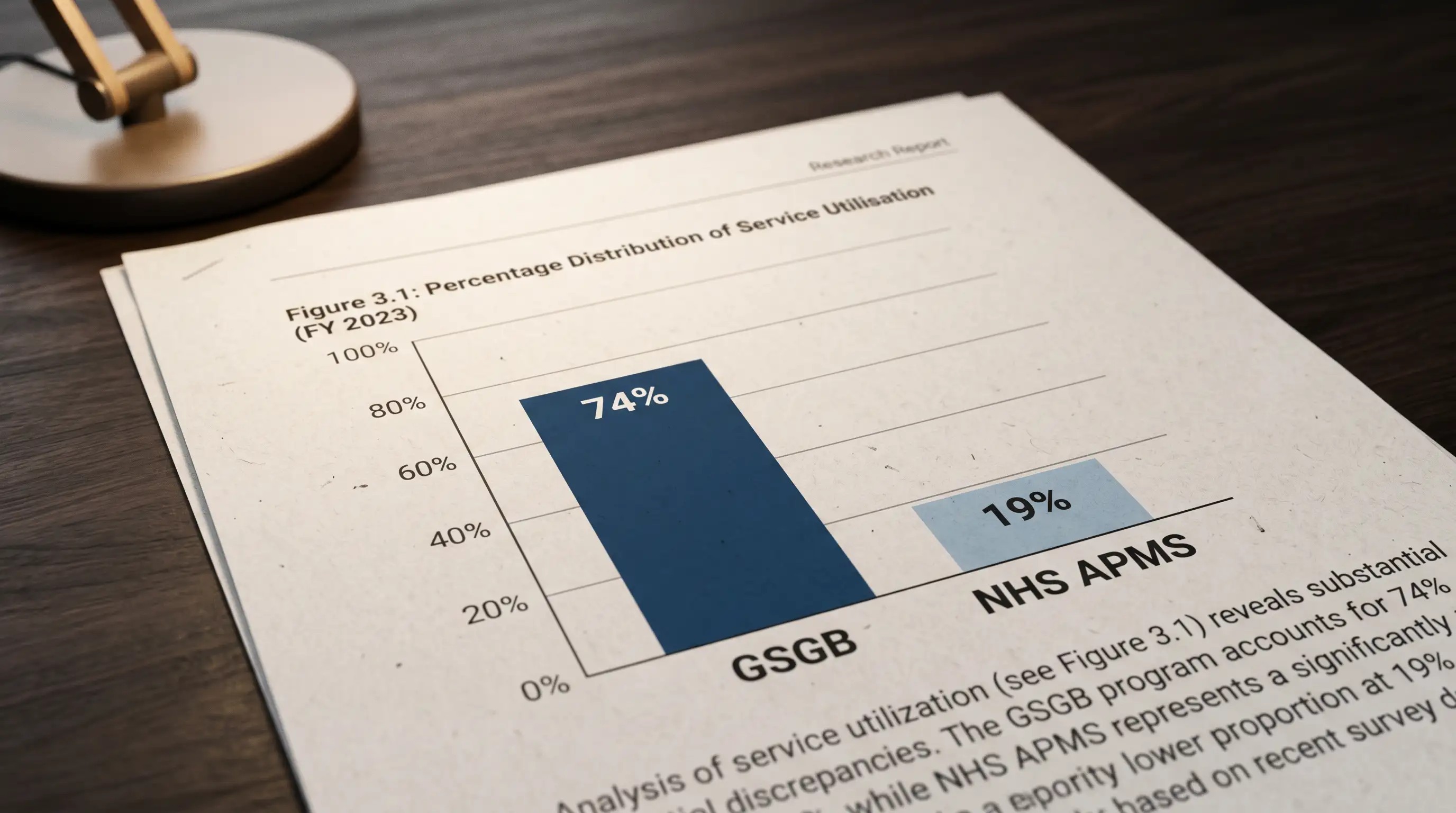
Comparing GSGB and NHS Data for Problem Gambling Rates
I sat through a gambling industry conference last November where two speakers quoted opposite problem-gambling statistics from the stage within the same hour. One cited the 2.7% figure from the Gambling Survey for Great Britain. The other cited the 0.4% figure from the NHS Adult Psychiatric Morbidity Survey. Neither acknowledged the other’s number. Both were correct within their own methodological frames, and the gap between them — a factor of roughly seven — is the single most contested measurement question in UK gambling policy. It also matters enormously for how UK MMA bettors should think about their own behaviour and the environment they are operating in.
The headline figures. The Gambling Survey for Great Britain Year 2 2024 put the UK adult problem-gambling rate at 2.7%, with a further 3.1% at moderate risk and 8.8% at low risk on the PGSI scale. The NHS Adult Psychiatric Morbidity Survey 2023/24 put the clinical-threshold rate at 0.4% of adults in England, with 5% at-risk under the broader Health Survey for England 2024 methodology. Both surveys use the Problem Gambling Severity Index as their measurement tool. They produce radically different numbers through differences in methodology, sampling and interview context.
This piece unpacks how the two surveys actually work, why their results diverge so dramatically, which methodology produces more reliable estimates for specific purposes, and what the numbers mean for UK MMA bettors trying to understand their own relationship with betting. The companion piece on GAMSTOP and MMA self-exclusion covers the practical response layer; this piece is the underlying epidemiology.
Inside the Gambling Survey for Great Britain
The Gambling Survey for Great Britain is a UKGC-commissioned population survey launched in its current form in 2023 and now running on an annual cycle. Year 2 2024 data is the current reference point, with Year 3 2025 expected in 2026. The survey is designed specifically to measure gambling participation, gambling-related harms, and problem-gambling prevalence across the UK adult population.
The methodology uses postal invitations sent to random samples of UK households, followed by online survey completion. Sample sizes run in the tens of thousands — the Year 2 2024 dataset includes over 20,000 respondents — which is large enough to support subgroup analysis across age, gender, regional and socioeconomic categories. The survey asks the PGSI questions within a broader context of gambling behaviour questions, which some methodologists argue primes respondents to report gambling-related issues.
The PGSI itself is a nine-item questionnaire developed in Canada and widely adopted internationally. Scores of 8 or above on the PGSI are treated as the problem-gambling threshold. Scores of 3 to 7 indicate moderate risk. Scores of 1 to 2 indicate low risk. The GSGB 2.7% figure captures respondents scoring 8 or higher, with the 3.1% moderate-risk and 8.8% low-risk figures covering the lower thresholds.
Subgroup analysis from the GSGB data is particularly revealing. Among UK men, the problem-gambling rate sits at 6% — more than double the 2.7% overall population rate — against 2.8% for women. The 18-to-24 age group shows problem-gambling rates reaching approximately 10%, roughly four times the population average. Regional deprivation produces dramatic variation: in areas of high socioeconomic deprivation in Scotland, the rate climbs to 11%, against less than 1% in the least deprived areas. The overall 2.7% figure masks enormous variation across population segments.
The 12.2% figure from the same survey captures respondents who reported suicidal thoughts or attempts in the preceding year, with 5.2% of these respondents attributing the thoughts partly or fully to gambling. The question of how to interpret these numbers is a separate debate — clinical psychiatrists dispute whether such attribution can be reliably captured through a self-report survey — but the raw figure itself is part of what has driven the intensity of UK gambling policy discussion over the past two years.
The UKGC’s chief executive framed the survey’s purpose in the Year 2 announcement: “The Gambling Survey for Great Britain is a key building block of the evidence base which helps government, industry and other partners understand both gambling behaviour and potential consequences from gambling.” The positioning as an evidence-building exercise rather than a definitive measurement matters because the survey is explicitly intended to inform policy development rather than to produce a single authoritative prevalence figure.
The NHS Adult Psychiatric Morbidity Survey Approach
The NHS Adult Psychiatric Morbidity Survey is a completely different instrument. It is a clinical epidemiological survey conducted face-to-face in respondent homes, with fully trained interviewers, covering a wide range of mental-health conditions. Gambling is one of many topics covered within the broader mental-health assessment, not the survey’s primary focus.
The APMS methodology produces the 0.4% clinical-threshold problem-gambling rate figure. Sample sizes are smaller than GSGB — the 2023/24 round covered approximately 7,500 adults in England — but the sample is clinically rigorous with interviewer-administered assessments and detailed diagnostic validation. The PGSI questions appear in the context of broader mental-health questions, which some methodologists argue produces more accurate responses because the gambling questions are less central to the survey’s framing.
The 0.4% figure is roughly consistent with historical clinical surveys of gambling prevalence in the UK. Earlier British Gambling Prevalence Surveys conducted between 1999 and 2010 produced similar figures in the 0.4% to 0.9% range, which aligns with the APMS number and diverges sharply from the GSGB number. The historical consistency of clinical surveys around a 0.5%-to-1% estimate is one of the strongest arguments for the APMS methodology producing more reliable prevalence data.
The Health Survey for England 2024 provides a complementary at-risk figure of 5% of adults — not problem gambling but at-risk behaviour under PGSI scoring of 3 or higher. This intermediate figure sits between the 0.4% clinical-threshold rate and the GSGB’s combined 2.7% + 3.1% = 5.8% at-risk-or-problem figure. The three-way comparison across methodologies produces a range that policy analysts have to navigate rather than resolve.
Treatment access figures from APMS round out the clinical picture. Of UK adults at PGSI 3 or higher — the at-risk and problem-gambling bands combined — only 6.3% have received a professional diagnosis and only 1.0% have received specialist treatment. The treatment gap is enormous regardless of which prevalence figure you accept. The UK’s specialist gambling-treatment infrastructure has expanded substantially, with nearly 2,000 NHS referrals to specialist clinics between April and September 2024 — a 130% increase on the preceding year — but the referral volume remains small against any reasonable estimate of prevalence.
Why the Two Surveys Give Different Answers
The factor-of-seven gap between 2.7% and 0.4% is not explainable by simple margin-of-error effects. The surveys are measuring something different about the same population, and understanding the difference requires looking at methodology carefully.
Self-selection into the GSGB is one contributor. Postal invitations to random households produce differential response rates across the population, and people with strong views about gambling — including people who have personal experience of gambling harms — are more likely to complete the survey than those without such views. The GSGB sample is therefore slightly skewed toward higher gambling engagement and higher gambling-related concerns than the general population, which lifts the prevalence estimate above the true population rate.
Context effects are a second contributor. The GSGB frames the PGSI questions inside a broader gambling behaviour questionnaire. Respondents answering a gambling survey are primed to think about gambling behaviours and may report marginal experiences as more significant than they would in a general-population health survey. The APMS frames the PGSI inside a broader mental-health assessment, which reduces the priming effect.
Interviewer effects are a third contributor. APMS uses trained face-to-face interviewers who can clarify questions, probe for diagnostic consistency, and validate responses against clinical criteria. GSGB uses online self-completion, which removes interviewer support but also removes potential interviewer bias. The face-to-face methodology historically produces lower self-reported rates of sensitive behaviours including problem gambling, possibly because respondents are less willing to disclose in person than anonymously online.
One industry-side voice captured the policy frustration with the discrepancy: “Perhaps the Commission and the NHS could come up with a way to standardise this a bit better so we have a more decisive conclusion about what the problem gambling rate actually is.” The frustration is understandable. The UK gambling policy debate is conducted with both figures in circulation, and speakers selectively cite the figure that supports their preferred policy direction. Industry-aligned voices cite the 0.4% figure to argue for proportionate regulation. Public-health-aligned voices cite the 2.7% figure to argue for expansive regulation. Neither figure is wrong within its methodology; neither is obviously the single correct prevalence rate.
What This Means for a Responsible UK MMA Bettor
The practical question for UK MMA bettors is not which survey is correct in absolute terms. It is what the range of estimates means for individual risk assessment. Both surveys agree that problem gambling exists at meaningful prevalence in the UK. Both agree that rates are higher among men, among younger adults, and among areas of socioeconomic deprivation. Both agree that treatment access is dramatically below need at every plausible prevalence estimate.
The MMA-specific consideration is that neither survey breaks out MMA bettors as a distinct subgroup. We do not know whether MMA bettors sit above or below the overall gambling-population average for problem-gambling rates. Inferential reasoning based on adjacent evidence suggests MMA bettors may carry slightly elevated risk — the demographics skew toward 25-to-44-year-old males, which is the highest-prevalence gambling group across both surveys. But that is an inference, not a measurement.
The responsible approach does not depend on resolving the measurement debate. Regardless of whether the true prevalence is 0.4% or 2.7%, individual bettors can assess their own behaviour against PGSI criteria and act accordingly. Setting deposit limits proactively — covered in the piece on deposit limits on UK MMA betting sites — is the concrete behaviour that reduces individual risk regardless of population prevalence estimates. Self-excluding through GAMSTOP for specific periods is available as a stronger intervention. NHS specialist gambling clinics and GambleAware-supported services provide treatment for those who want it.
The 1.0% treatment-access figure from APMS is the number I find most unsettling in the data. Even accepting the clinical 0.4% problem-gambling rate as the conservative estimate, the gap between prevalence and treated caseload suggests that most people who would benefit from specialist support are not receiving it. The statutory levy introduced in April 2025 at 1.1% of operators’ GGY is funding a gradual expansion of treatment capacity, with the 2025/26 pool projected at £90 million to £100 million. That funding will help close the treatment gap over time. In the meantime, individual bettors’ willingness to reach out for support when they need it remains the frontline intervention.
One closing observation. The self-reported mental-health figures sitting alongside the GSGB headline rates — with over 5% of respondents connecting suicidal thoughts to gambling behaviour — are the numbers that should sober any serious reflection on gambling in the UK. Whether the precise prevalence is 0.4% or 2.7%, a non-trivial subset of the affected population carries severe consequences. The industry’s commercial scale, the operators’ product sophistication, and the bettor’s personal enjoyment all exist alongside that reality. Holding both in mind simultaneously is what responsible participation in this market actually requires.
Does the NHS or the UKGC figure matter more for UK gambling policy in 2026?
Both figures inform policy debate. The UKGC’s GSGB data typically shapes regulatory direction because the UKGC is the primary gambling regulator and commissions the survey directly. The NHS APMS data informs clinical service planning and specialist treatment capacity. Policy responses like the 31 October 2025 deposit-limit prompt and the 2025 statutory levy have drawn on both data sources rather than relying exclusively on either. Expect both measurements to continue being cited in parallel through the 2026 regulatory cycle.
Are MMA bettors represented in either survey as a distinct subgroup?
No. Neither the GSGB nor the APMS breaks out sport-specific betting subgroups in their published analysis. MMA bettors sit within the broader online sports-betting population in the data. Demographic overlap suggests MMA bettors are likely concentrated in the 25-to-44 male demographic that shows higher overall gambling-engagement rates, but no direct evidence exists on whether MMA-specific problem-gambling rates differ from the population average.
Published by the mma Betting Online team.