TKO UFC Financial Results and Betting Market Trends
 Available in US
Evaluating Industry Expansion via TKO UFC Financial Results
A reader told me last April that he had stopped reading UFC corporate filings because “the numbers don’t matter to my bets.” I disagreed politely and then wrote him a long email explaining why. The numbers matter because they shape how UFC operates — which cards get produced, which fighters get signed, how often UK events happen, how deeply operators invest in UFC betting products. Reading the corporate numbers is not about trading TKO stock. It is about understanding the commercial context in which the fights you bet on actually occur.
TKO Group Holdings reported UFC 2025 revenue of $1.502 billion, up 7% year on year, with an adjusted EBITDA margin of 57%. Those are the headline figures from the Q4 and full-year 2025 earnings release on 25 February 2026. The margin number is remarkable — few entertainment businesses of any scale operate at 57% adjusted EBITDA — and it tells UK bettors something important about the durability of UFC as a product. Fighters will keep getting signed. Cards will keep being produced. UK promotional investment will keep flowing. The commercial machine is stable and profitable.
This piece walks through the specific UFC financials, what the margin structure funds, how corporate scale reaches the betting slip, and what risk factors TKO itself flags that could affect UK markets. The broader media-rights context sits in the piece on the Paramount UFC deal and UK fan impact; this piece zooms in on the operating financial picture that sits beneath the headline deals.
UFC Revenue: $1.502bn and 7% YoY Growth
The UFC segment within TKO’s consolidated results generated $1.502 billion of revenue in 2025. The 7% year-on-year growth rate continues a multi-year pattern of single-digit expansion on top of an already large revenue base. For context, this is revenue scale comparable to major English Premier League clubs, and substantially larger than any other MMA promotion globally.
The revenue breakdown matters. UFC revenue is not monolithic; it spans media rights, live event ticket sales, sponsorships, merchandise and licensing. Media rights represent the largest single share — approximately 55% to 60% of total UFC revenue in recent years — and the Paramount seven-year $7.7 billion deal starting in 2026 will push that share higher still. Live event revenue, including ticket sales and gate receipts from UFC cards globally, contributes roughly 15% to 20%. Sponsorships and other revenue streams make up the remainder.
UK-specific contribution to UFC revenue is not individually broken out in TKO’s public filings, but the UK is the promotion’s fifth-largest global revenue market and the flagship European territory. UK audience engagement drives TNT Sports’ rights valuation, UK event attendance generates gate receipts, and UK sponsorship activity contributes to the overall revenue picture. The UFC London Fight Night in March 2025 — attendance 18,583, gate $4.71 million, a Fight Night attendance record — illustrates the scale of UK commercial contribution on specific cards.
Growth at 7% is not spectacular for a growth-story asset, but it is exceptional durability for a mature entertainment business. The pandemic shock of 2020 temporarily disrupted UFC’s revenue trajectory, and the subsequent recovery has produced the consistent mid-single-digit growth pattern that stabilised through 2025. The 7% figure beats US GDP growth, beats inflation, and significantly exceeds the growth rate of most traditional entertainment properties. For UK bettors, the stability signal matters more than the specific growth rate: UFC is not a business in commercial decline that might suddenly contract its UK programming.
The 57% Margin and What It Funds
The 57% adjusted EBITDA margin is the number that separates UFC from its competitors. Adjusted EBITDA at 57% of revenue means the business generates roughly 57 cents of operating profit per dollar of revenue before interest, tax, depreciation and amortisation. In 2025 that translated to roughly $856 million of adjusted EBITDA on the $1.502 billion revenue base.
For comparison: major English Premier League clubs typically operate at adjusted EBITDA margins of 10% to 30%. Global entertainment conglomerates like Paramount or Warner Bros. Discovery operate at margins around 15% to 25% at segment level. UFC’s 57% margin is in the territory of highly scalable digital businesses like streaming platforms at maturity, not traditional sports or entertainment properties. The margin profile is why TKO’s CEO noted in the earnings release that “TKO’s 2025 results reflect meaningful momentum across both UFC and WWE. Having concluded our second full year since forming TKO, we are extremely well positioned with long-term media rights agreements in place and operational strength across the business.”
What the margin funds is the specific question UK bettors should care about. Approximately $200 to $250 million per year funds ongoing live event production — cage construction, arena rental, production crew, broadcast infrastructure for Fight Nights and numbered PPVs. Approximately $150 million funds fighter pay across the roster. Approximately $50 to $75 million funds UFC’s own streaming platform Fight Pass and related direct-to-consumer infrastructure. The remainder flows through to corporate overhead, tax, capital investment and dividend capacity.
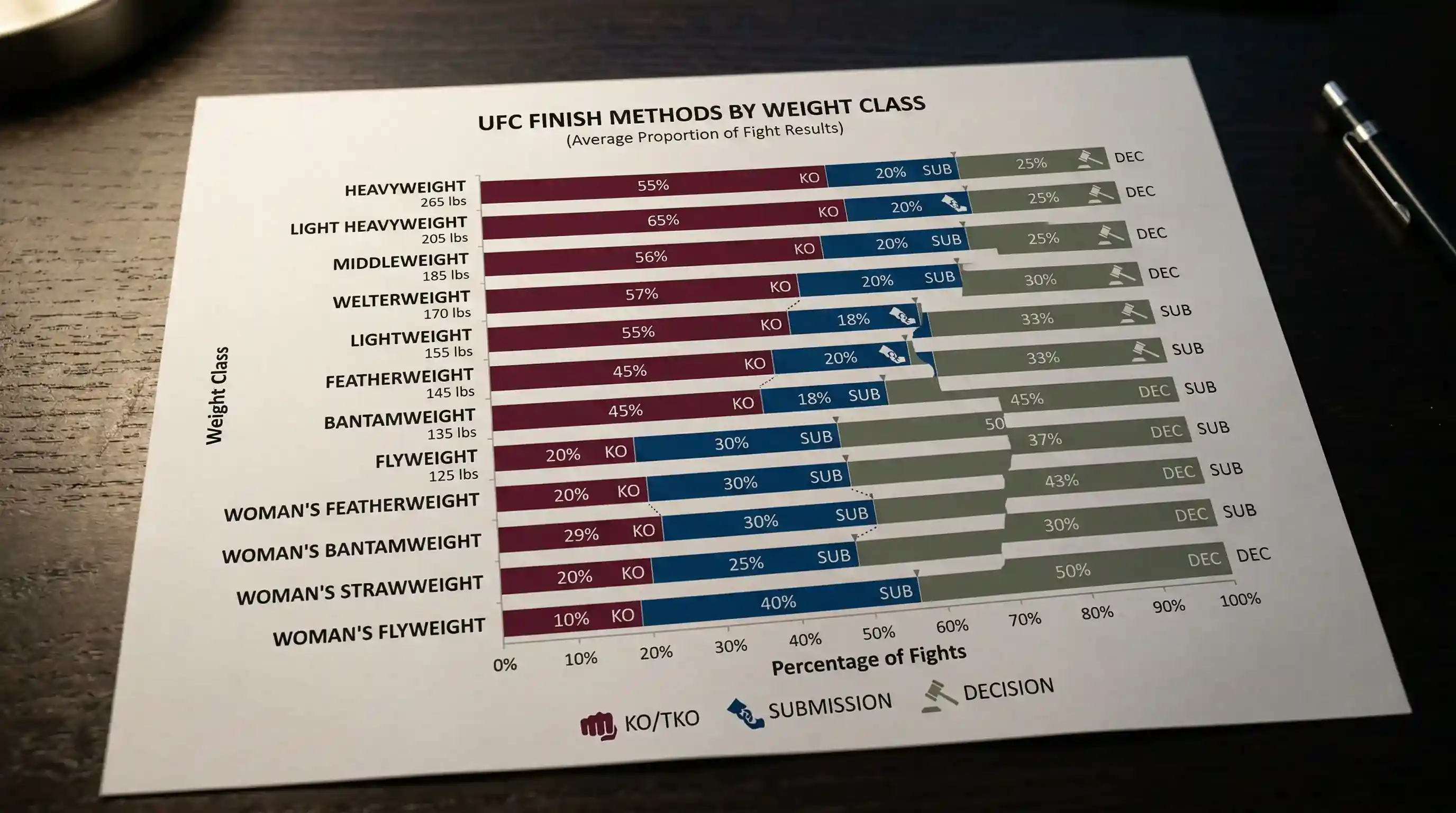
The fighter-pay allocation is the figure that prompts the most UK-bettor interest because it shapes fighter behaviour. With roughly $150 million distributed across 600+ contracted fighters, the per-fighter compensation varies enormously between top-of-card headliners and undercard prelim fighters. Bonus pools — Performance of the Night and Fight of the Night awards — add incremental compensation that scales with risk-taking and spectacular performances. Changes in how the bonus pool is structured ripple through fight outcomes in ways that matter for method-of-victory market pricing, as covered in more detail in the piece on how UK bookmakers price UFC method of victory markets.
How Scale Reaches the Betting Slip
The connection between corporate financials and betting slips runs through four specific channels. Each matters practically to UK bettors in measurable ways.
First, event frequency. UFC’s revenue scale funds approximately 40 to 45 live events per calendar year, a cadence that has held steady across recent seasons. Commercial contraction would reduce that cadence; commercial expansion supports current levels or modest growth. The 2026 schedule under the stable Paramount-era finances is tracking toward the historical cadence with no visible reductions, which means UK bettors have a consistent supply of UFC betting opportunities across the calendar year.
Second, UK card allocation. UFC matchmakers decide how many cards happen in the UK each year, and the decision is partly commercial. UK ticket sales, UK sponsorship activation, UK broadcast rights renewal windows — all of these flow into the matchmaking team’s calendar planning. Strong UK commercial performance produces more UK cards; weak UK commercial performance reduces them. UK event frequency has risen over the last three years in parallel with UFC’s overall commercial strength, and the trend is likely to continue through 2026 and 2027 based on the TKO financial trajectory.
Third, fighter roster depth. UFC’s talent acquisition budget funds the signing of emerging fighters from regional promotions — including British fighters moving up from Cage Warriors and European fighters from KSW, Oktagon and PFL circuits. Commercial scale means UFC can afford to sign promising fighters at competitive contract terms rather than letting them migrate to rival promotions. British MMA’s current roster strength in the UFC, captured by the Fight Matrix editorial framing of “Aspinall ruling the heavyweight division, Edwards and Garry keeping welterweight alive, Pimblett and Allen in top-ten positions, and Mokaev pushing forward at flyweight”, partly reflects UFC’s financial ability to attract and retain British talent.
Fourth, betting-product investment. UK sportsbook operators invest in UFC betting product depth in proportion to the commercial scale of the underlying property. UFC’s global revenue of $1.502 billion and growing translates into UK book investment in UFC-specific trading desks, market depth, in-play infrastructure and promotional activity. The product depth UK bettors access is downstream of UFC’s commercial scale, and commercial scale is downstream of the 57% margin that funds everything else.
Risk Factors TKO Flags That Could Affect UK Markets
TKO’s public filings include standard risk-factor disclosures that enumerate the scenarios that could disrupt the business. Several of these are specifically relevant for UK bettors to understand because they describe the ways UFC’s commercial stability could reverse.
Top talent retention is the most frequently cited risk. UFC’s commercial model depends on a small number of headline fighters driving event marketing and pay-per-view economics. The roster’s financial leverage over top fighters is stronger after the Paramount deal because per-event PPV-share negotiations no longer apply, but the converse risk is that disgruntled headline fighters could exit UFC for alternative promotions or non-MMA opportunities. Significant talent departures would reduce UFC’s marketing draw and translate into compressed commercial performance. For UK bettors, talent departures would most directly affect British UFC representation if any of the top British fighters — Aspinall, Edwards, Pimblett and others — were to exit the promotion.
Regulatory risk is the second major category. UFC operates across hundreds of jurisdictions with varying combat sports regulation, anti-doping frameworks and broadcasting licence structures. Regulatory changes — in the UK or elsewhere — could affect how UFC operates in specific territories. UK-specific regulation around gambling advertising, which is tightening under the 2025 LCCP updates and the statutory levy on operators’ GGY, affects how UK books can market UFC betting products, which indirectly affects UFC’s UK audience engagement through the operators’ promotional activity.
Injury exposure on the roster is a specific UFC risk that does not appear as visibly in other entertainment businesses. A wave of injuries to ranked fighters — as happened during the 2024 heavyweight picture before Aspinall’s consolidation — can disrupt title-fight scheduling, reduce PPV draw and compress revenue for specific quarters. TKO’s financial durability through these injury cycles has been strong, but individual quarters can show meaningful variance.
The broader commentary from TKO’s President captured the strategic framing: “2025 was a milestone year, underscoring the durability of our premium IP through record-setting live events and transformational global partnerships.” The durability claim is not just corporate rhetoric. It is a statement about the resilience of UFC’s revenue base against the typical disruptions that affect entertainment properties. For UK bettors, the practical implication is that the UK betting ecosystem around UFC is not vulnerable to sudden commercial collapse — the platform beneath the bets is stable.
Reading the Numbers as a UK Bettor’s Sanity Check
The practical application of TKO’s financial signals for UK bettors is modest but real. Quarterly filings come out in February, May, August and November each year, and each one provides updated signals on UFC’s commercial trajectory. Revenue growth consistent with prior trends is the normal picture; meaningful deviations — either upward or downward — are signals that the underlying commercial picture is shifting.
Upward surprises tend to produce incremental UFC investment: more cards, more promotional spending, occasionally expanded fighter pay. These signals support increased UK bettor engagement through better cards and deeper markets. Downward surprises, if they were to occur, would signal commercial tightening that could translate into reduced card frequency, less promotional investment, and less attractive betting environments. Neither has been a feature of recent TKO filings, which is itself a meaningful signal.
I do not recommend UK bettors become corporate-finance specialists. I do recommend that UK bettors reading MMA media for betting-relevant information treat the quarterly TKO cycle as a useful calibration point. The numbers are not glamorous. They are the foundation that makes everything else — cards, fighters, markets, in-play infrastructure — possible in the first place.
Does UFC’s $1.5bn revenue translate into improved fighter pay for betting purposes?
Fighter pay has increased in absolute terms alongside UFC’s revenue growth, though the compensation-to-revenue ratio has remained relatively stable at approximately 10% of revenue flowing to fighter pay. The Paramount deal may shift this ratio as pay structures adjust under the new media-rights era, but the empirical answer will take several quarters to resolve. For betting purposes, expect bonus-pool dynamics to shift gradually rather than through step-change, with method-distribution effects emerging over time rather than immediately.
Are TKO’s quarterly filings useful to UK MMA bettors or just investors?
The filings are useful for UK bettors as calibration points on UFC’s commercial health rather than as direct betting signals. Revenue trends, margin trajectory and disclosed risk factors affect how UFC operates — card frequency, fighter pay structures, UK event allocation — and those operational factors filter through to betting markets over time. Reading the filings is a low-effort way to maintain context on the commercial environment underlying the sport. Direct betting signals from the filings are rare; environmental signals are consistent.
Written by the editors at mma Betting Online.