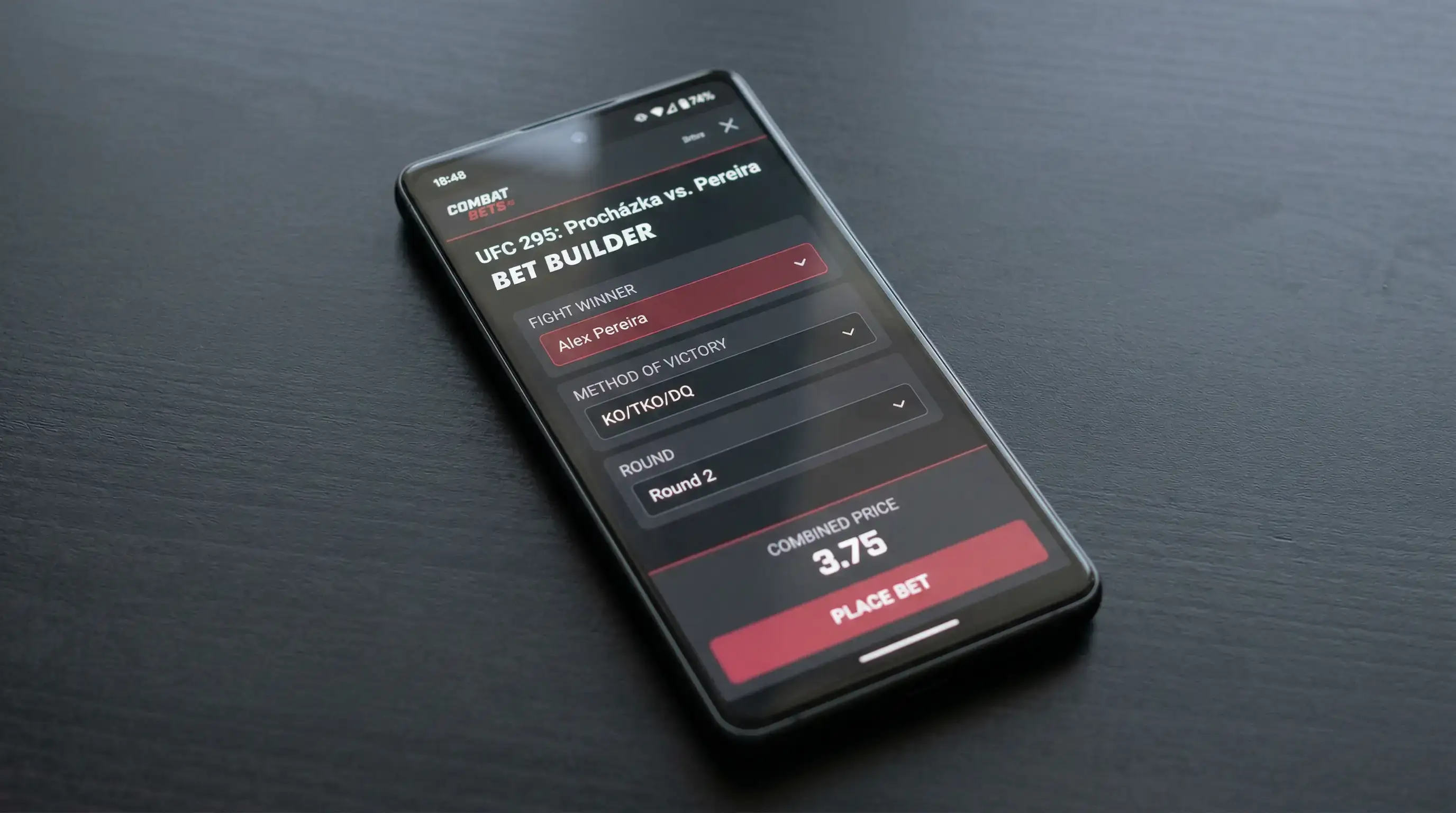
GAMSTOP Rules for UK MMA Betting Sites
 Available in US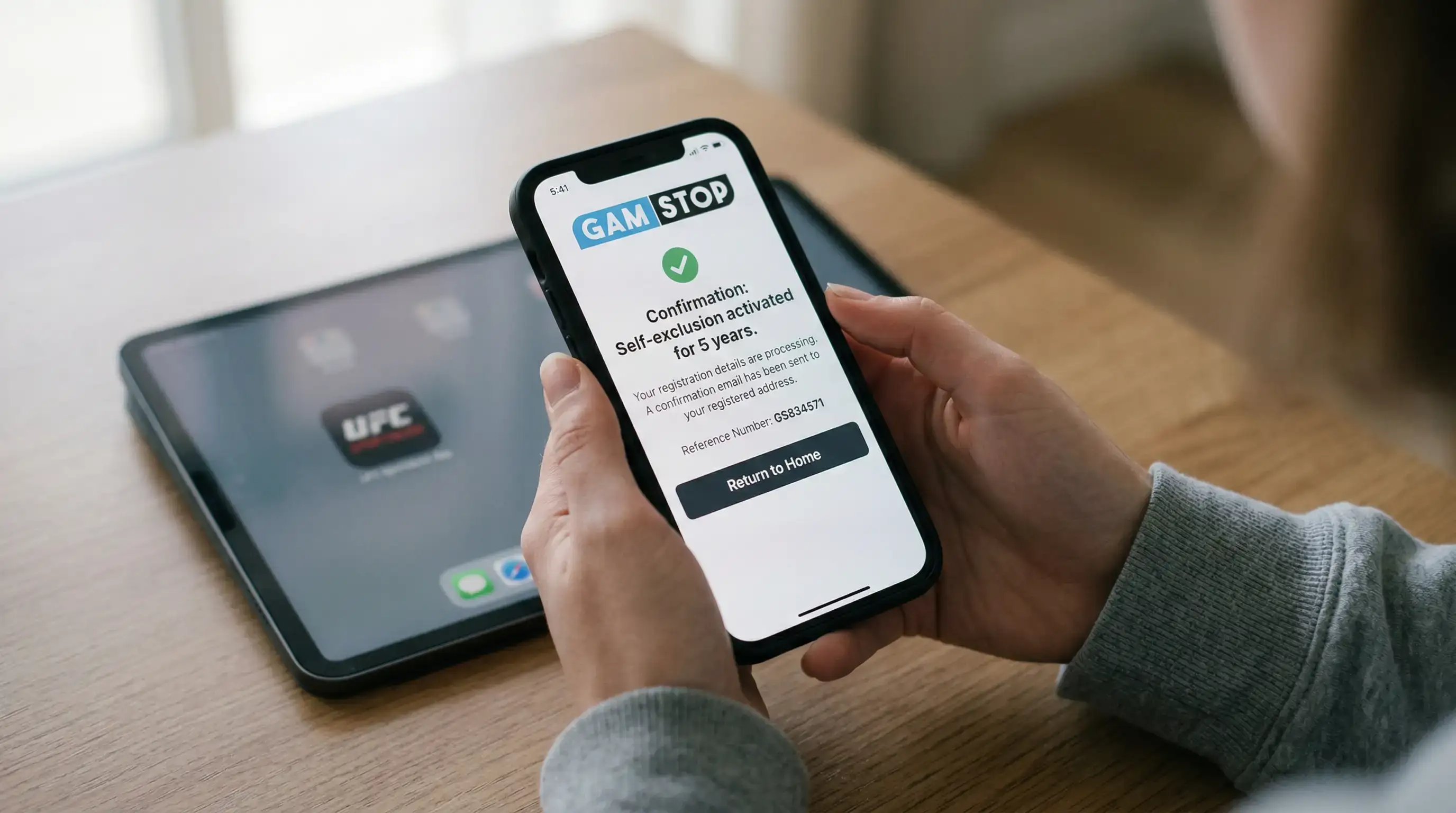
Enforcing Block Durations for GAMSTOP MMA Self-Exclusion
A reader messaged me in April. He had spent twelve hours the previous Saturday watching three cards back-to-back — a PFL card on his laptop, a UFC Fight Night on TNT Sports, a regional show on Fight Pass — and had placed bets on every single fight. He could not tell me how much he had staked, only that his account balances across four operators were now close to zero. He was asking whether GAMSTOP would stop him doing it again next weekend. The answer is yes, and the mechanics matter.
The 2024 Gambling Survey for Great Britain puts the adult problem-gambling rate at 2.7% — that is roughly 1.2 million adults showing problem-gambling indicators at PGSI 8 or higher. A further 3.1% sit at moderate risk and 8.8% at low risk. MMA bettors are not a demographically distinct subgroup in the survey, but the combination of frequent cards, late-night starts, 24-hour prop market coverage and mobile-first wagering creates exactly the conditions that the clinical literature flags as elevated risk. If you have asked yourself whether you should stop — or if someone close to you has asked — this piece is for you.
GAMSTOP is the single most effective consumer-facing self-exclusion tool available in the UK, and it is free. The rest of this article is a plain-language walk-through of what it blocks, how to sign up, what happens when the exclusion period ends, and the support that exists alongside it. One note before we go further: if you are in crisis right now, call the NHS National Gambling Helpline on 0800 0327 1600. That line operates 24 hours.
What GAMSTOP Blocks Across UK MMA Sites
GAMSTOP is a central register. You enrol once, you choose a duration, and every UK Gambling Commission-licensed operator is required to check the register before accepting a new account or processing a bet from an existing account. If your details match the register, the operator is legally obliged to refuse service for the duration of your exclusion. Every. Single. One.
The practical coverage is comprehensive across the regulated UK MMA betting landscape. Sportsbooks. Casino platforms. Exchanges holding UK licences. Mobile apps. Cross-domain sites where the same operator runs multiple brands. The NHS received nearly 2,000 referrals to specialist gambling clinics between April and September 2024 — a 130% increase on the same period in 2023 — and GAMSTOP integration is part of the reason the referral system has any chance of being effective, because it hard-stops re-engagement during the clinical intervention window.
What GAMSTOP does not block is offshore operators without UK licences. That is not a flaw in GAMSTOP; it is a deliberate limitation of any consumer-protection scheme operating within a national regulatory perimeter. Offshore sites explicitly market themselves as “not on GAMSTOP” to UK self-excluded users, which is the clearest indicator that they are operating outside the UK legal framework. The companion piece on whether UFC betting is legal in the UK covers the legal and practical risks of those sites in detail. For GAMSTOP purposes the rule is simple: if a site advertises being “not on GAMSTOP”, it is targeting the one customer base it should not be serving, and enrolment does not protect you from it unless you also remove the access routes — which we will come to.
GAMSTOP does not block non-gambling content on a bookmaker’s site. You can still read UFC news on a sportsbook’s content pages, access podcasts, watch highlights. The block is specific to account creation and gambling transactions. In practice this distinction matters less than it sounds because the whole point of most sportsbook content is to funnel readers toward bets, and the trigger pathways are exactly what you are trying to break.
Registering for GAMSTOP: Step by Step
Registration takes about five minutes on a phone. Go to gamstop.co.uk directly in your browser — do not click through from a bookmaker’s responsible-gambling page, because you want the genuine domain and the cleanest session, not one with a cookie trail from your current operator. The service is free and always has been. Anyone asking for payment to enrol you is running a scam.
You will be asked for your full name, date of birth, current address, postcode, email, mobile number and any previous addresses within the last seven years. The address history is important because it ensures you cannot create an account using old registration details a bookmaker might still have on file. You will also be asked to upload a proof of address — a recent utility bill, bank statement or council tax bill works — so that the register can match you accurately across operator databases.
Choose the duration. Six months, one year or five years are the three options. The system sends you an email confirmation and within 24 hours the exclusion propagates across the licensed UK operator network. From that moment any attempt to open a new account or log into an existing account with matching details will be rejected. Some operators close existing accounts on GAMSTOP match; others suspend them until the exclusion ends. Either way, funds in the account are returnable on request.
A few practical notes from seeing people go through this process. Use an email address you actually check, because if the register details need updating you need to act on the notification. Enrol all household gambling identities — some people bet under variations of their name; the register matches partial identity data but not perfectly. And block the bookmaker apps physically. GAMSTOP prevents you from logging in, but leaving the apps on your phone provides a daily cue to try. Delete them, delete the browser bookmarks, and consider installing gambling-blocking software on your devices. GAMSTOP is necessary infrastructure; it is not the entire solution.
6 Months, 1 Year, 5 Years and What Happens Next
The duration you choose matters more than people expect, because reinstatement is not automatic at the end of the period. That design is deliberate, and it is one of the things GAMSTOP does well.
Six months is the minimum and is the right choice for most people going through a first enrolment. It is long enough to break habit loops — the clinical literature on behavioural change consistently finds that three to six months is the window over which automatic patterns genuinely weaken — without committing to a block that might feel coercive if the initial urgency passes. Twelve months is the middle option and is appropriate for people returning to GAMSTOP after a previous exclusion or people whose problem gambling has included significant financial harm. Five years is the maximum and is usually chosen by people who have tried shorter exclusions and found them insufficient.
Here is the critical mechanic. At the end of whatever period you choose, your details remain on the register for a further seven days beyond the original end date. During that cooling-off window you cannot gamble even if you want to. After seven days, the register does not automatically re-enable your account access. You have to contact GAMSTOP and specifically request removal. If you take no action, the exclusion simply continues indefinitely. This is the right way round. Self-exclusion should be easy to start and deliberately harder to undo.
The re-engagement experience is also worth describing because it is where people relapse. You contact GAMSTOP, confirm your identity, and the register flags you as removed. Operators then have to rebuild your account access individually — each bookmaker has its own reinstatement process, which typically involves a fresh KYC check, a re-prompt on deposit limits under the 31 October 2025 LCCP rules, and sometimes a cooling-off interview with the operator’s responsible-gambling team. The process is intentionally frictional. If you find yourself pushing through all of it immediately, that is itself a signal worth reflecting on.
Support Beyond GAMSTOP: NHS, GambleAware, Helplines
GAMSTOP is an access-control tool. It blocks a route. It does not treat the underlying behaviour, and for many people the technical block is only the first step in a broader recovery process.
The NHS now operates specialist gambling clinics across England, with adult services in London, Manchester, Leeds, Sunderland, Southampton, Stoke and Liverpool, plus a national service in Scotland and dedicated services in Wales and Northern Ireland. Treatment is free and delivered through NHS Talking Therapies or, for more severe presentations, specialist in-person and remote CBT-based interventions. Referral can come through your GP, self-referral via the NHS gambling helpline, or through the clinics themselves. The 2,000 referrals figure I mentioned earlier is the scale the system is now dealing with, and it is still growing.
The NHS 2023/24 Adult Psychiatric Morbidity Survey put the clinical-threshold problem gambling rate at 0.4% of the adult population of England, with only 6.3% of people at PGSI 3 or higher receiving a professional diagnosis and just 1.0% receiving specialist treatment. Those numbers tell you two things at once. The NHS is reaching more people than it used to, and the gap between prevalence and treated caseload remains enormous. If you are on the self-identification side of that gap, the helpline is the single most accessible entry point.
GambleAware funds the National Gambling Support Network, which includes GamCare, Gordon Moody, and regional providers offering counselling, residential treatment for severe cases, family support and financial advice. The statutory levy introduced on 6 April 2025 at 1.1% of online operators’ GGY is funding an uplift in exactly this capacity, with the 2025/26 levy pool expected at £90 million to £100 million. The funding model is finally serious. The services it supports are expanding accordingly.
For family members supporting someone through problem gambling, GamFam and the affiliated family-support services are specifically designed for that role. Self-exclusion works better when the people close to you know about it and support it rather than treating it as a private mechanism. It is not private. It is infrastructure, and it performs best when it is treated that way.
Using GAMSTOP as Part of a Broader Plan
GAMSTOP does not fix problem gambling on its own. It is a block, not a treatment, and treating the block as a solution is one of the most common patterns I see in readers who relapse after their exclusion period ends. The infrastructure is there. Use all of it. Register with GAMSTOP for the appropriate duration. Set device-level gambling blocks separately. Delete apps. Talk to your bank about transaction-level blocks on gambling merchants, which most UK high-street banks now support as a toggle in the app. Contact the NHS helpline or your GP to start the clinical conversation. Tell someone you trust. Each layer strengthens the others. None of them works alone.
Does GAMSTOP cover sportsbook apps as well as websites?
Yes. GAMSTOP operates at the operator level, not the domain level. Any UKGC-licensed bookmaker is required to check the register for new sign-ups and existing customer logins across every product channel they operate — website, mobile app, in-app betting, affiliated brands. If the operator holds a UK licence, their apps are in scope.
Can I still use a bookmaker’s non-gambling content while self-excluded?
Technically yes. GAMSTOP blocks gambling transactions and account access, not access to an operator’s news pages, podcasts or highlight reels. In practice, continuing to read a bookmaker’s content during self-exclusion tends to undermine the exclusion because the content is designed to funnel visitors toward bets. Most recovery advice recommends avoiding operator-branded content entirely during exclusion.
Prepared by the mma Betting Online editorial staff.