UFC Betting Markets and Octagon Wagering Options
 Available in US
Table of Contents
- Analyzing Moneyline and Prop Odds in UFC Betting Markets
- The Moneyline: The Market Every Casual UK Bettor Starts With
- Method of Victory: KO/TKO, Submission, Decision
- Round Betting and Group-of-Rounds Markets
- Over/Under Total Rounds and Go-the-Distance
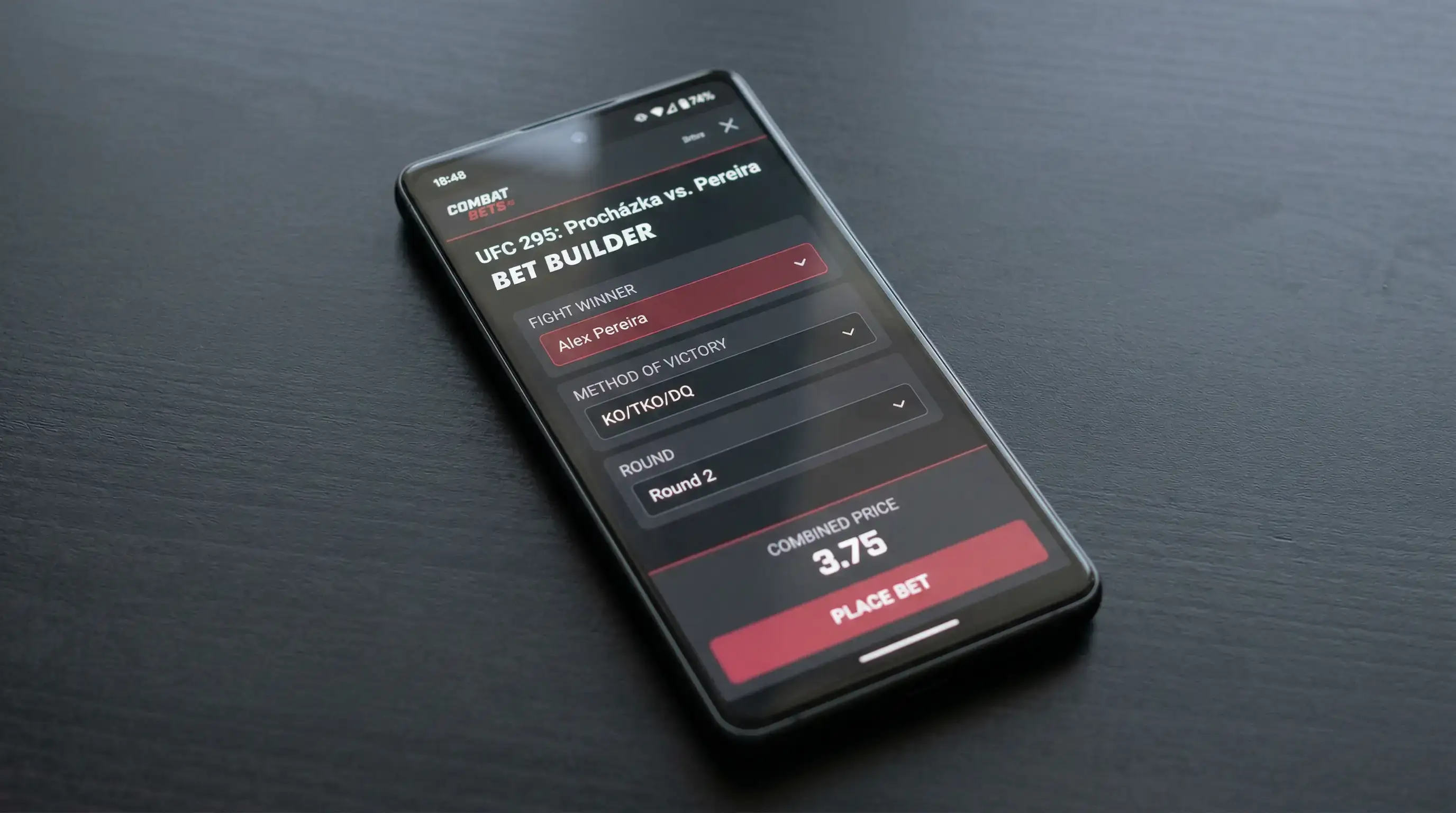
- Bet Builder for UFC: Stacking Correlated Selections
- Prop Markets: Fight Props, Fighter Props, Event Props
Analyzing Moneyline and Prop Odds in UFC Betting Markets
The first UFC slip I ever filled out in 2015 had four markets on it. The one I opened last Saturday night for a Fight Night prelim had forty-seven. That is the real change in British MMA betting, and it is the change almost nobody explains to you before you stake your first fiver on Tom Aspinall.
I have spent eleven years watching UK books rebuild their octagon menus fight by fight. The short version is this: on a modern UKGC-licensed slip you are no longer choosing who wins. You are choosing which of roughly a dozen distinct market families to read, how they interact, and where the book is most likely to have mispriced one leg relative to another. That is a very different skill from picking the better fighter.
UK remote betting turnover tells you why operators pack so much onto a single card. Remote betting GGY in Great Britain sits at about £2.6 billion a year, with football pulling the lion’s share at £1.3 billion and horse racing next — MMA tucks into the “Other sports” bucket alongside tennis, golf and the rest. That grouping flatters nobody. On a big fight night the concentration of British turnover onto a handful of UFC bouts is enormous, and every licensed operator wants a share. The way they fight for it is by stacking markets.
In this piece I walk you through every market family you will actually see on a British slip during a normal UFC card, in the order I open them myself. Moneyline, method of victory, round betting, over/under rounds, bet builders, and the sprawl of fighter and event props underneath. I will tell you where each market is priced tightly, where the margin quietly doubles, and which combinations UK books refuse to let you stack. The wider map of how British punters approach the octagon lives in the UK MMA betting online guide. Every price here is illustrative; every example uses a generic fighter pair. Real markets move. The mechanics do not.
Beyond simply picking a winner, understanding how bookmakers price UFC method of victory markets can significantly increase your betting edge.
The Moneyline: The Market Every Casual UK Bettor Starts With
Ask ten British punters which market they bet most on UFC cards and nine will say moneyline without pausing. The tenth is lying. This is the entry drug of combat sports betting — pick the winner, collect if they win, no partial credit for nearly winning. It is also the market where casual money is worst priced, which is precisely why the favourites keep drifting in.
The mechanics are blunt. UK books offer two prices, one on each fighter. In a typical main-event matchup you might see fractional odds like 1/3 on a dominant champion — meaning a £3 stake returns £1 profit — and 11/4 on the challenger, where a £1 stake returns £2.75 profit on top of your stake back. The decimal equivalents are 1.33 and 3.75. Draws happen in MMA, but less than 2% of the time, which is why a formal three-way moneyline is rare on British slips. Most UK books give you a two-way book and void on a draw, returning your stake.
Here is the number that should reset your whole relationship with this market. UFC favourites win roughly 72% of fights across recent data; underdogs land the remaining 28% to 30%. That is a much lower favourite hit rate than casual punters assume, and it is the foundation of every serious strategy argument about the octagon. When nearly a third of priced favourites lose, a market priced with any real margin on the dog side will periodically offer genuine value to anyone patient enough to wait for the right shape of matchup.
The British specificity is the way prices are expressed. UK books default to fractional, exchanges to decimal, and casuals rarely convert between the two. That conversion matters — the most common mistake I watch new British MMA bettors make is chasing shortening favourite prices without noticing how badly the implied probability has moved. A favourite drifting from 1/3 to 2/5 looks trivial on a slip. The implied probability has crept from 75% up to 71.4%, and you have handed the book four clear percentage points of edge you did not need to give it. The odds mechanics are a discipline in themselves, and I cover them in detail in UFC odds and value betting for UK punters.
The finish-rate trap is the second thing to notice. Moneyline is agnostic about how a fighter wins — a doctor’s stoppage counts the same as a flying-knee knockout. Fine if you are picking the better fighter. Murder if you are backing a grinder who expects to edge a close decision, because you are paying the same price as if you thought they would finish. The smarter move, when you have a strong stylistic read, is to look past moneyline entirely and land on one of the markets below. Treat the moneyline as your anchor, not your weapon. It tells you what the book thinks. The value nearly always lives elsewhere.
Method of Victory: KO/TKO, Submission, Decision
I once watched a friend celebrate a correct moneyline pick on a five-round war, then quietly admit at the bar that a method-of-victory bet on the same fighter would have paid him four times as much. He had read the stylistic matchup perfectly and then backed it with the wrong market. British books love that kind of punter. Method of victory is where you get paid for knowing how, not just who.
The structure on a UK slip is usually three outcomes per fighter: win by KO or TKO, win by submission, win by decision or technical decision. Some books add “win any method” as a shortcut back to moneyline-equivalent pricing for casuals who do not want to think about it. Six real outcomes across the two fighters, occasionally extended by technical decisions or disqualifications depending on the book’s rule set. The prices separate quickly. A grinder with elite top pressure might sit at 2/1 for a decision win and 14/1 for a KO, because his ground-and-pound is more attritional than explosive.
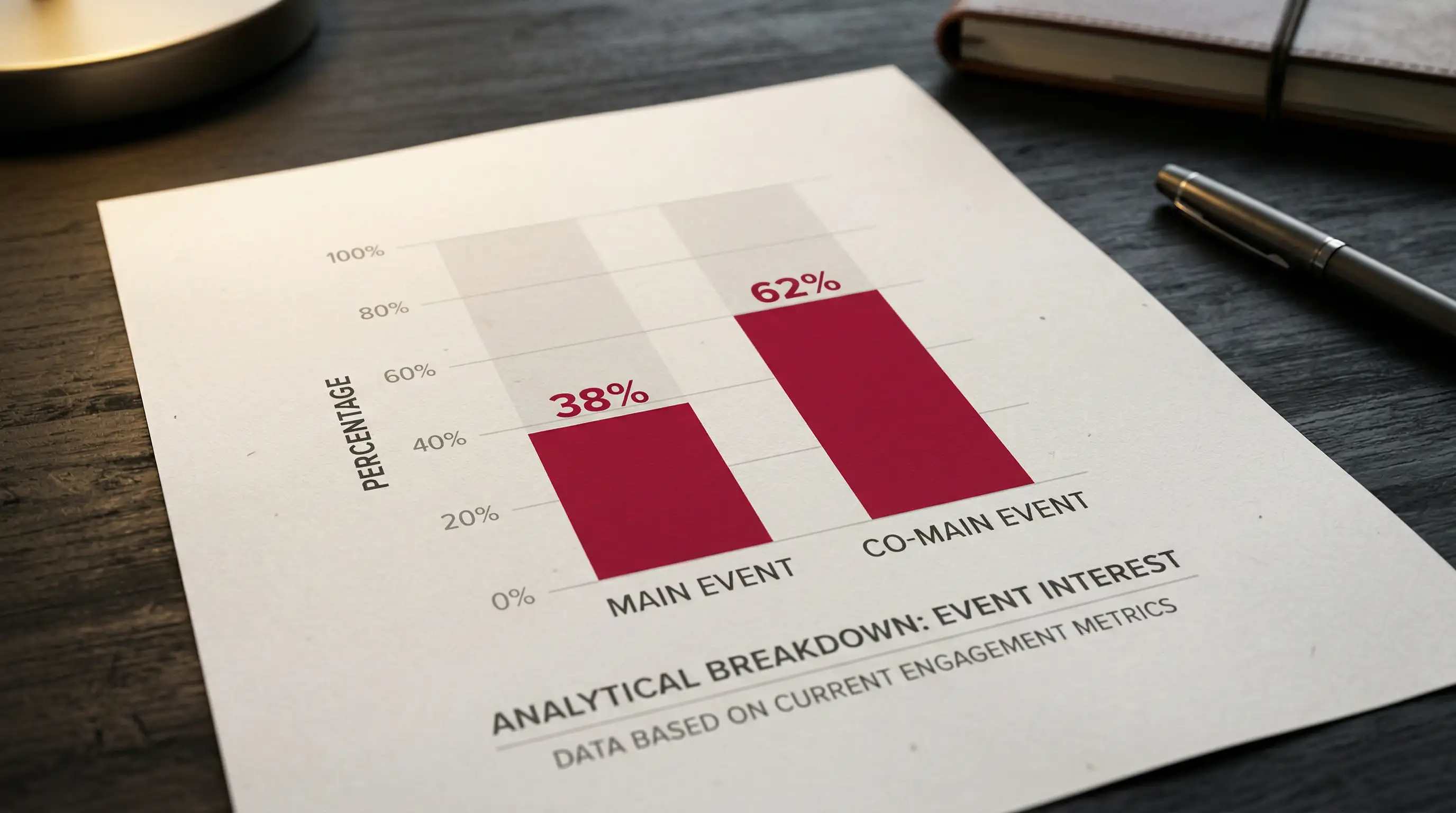
The number that shapes this market more than any other is the upset rate. Thirty per cent of UFC fights with a clear favourite and a clear underdog end in an upset, and the rate climbs to forty per cent on co-main events while sitting at twenty-three per cent on main events. Only twelve per cent of matchups are genuine pick ’em. That distribution is the reason books have to price method of victory so carefully — the outright winner is one question, the finish method is a second question, and the book needs margin on both axes or it bleeds.
Reading the market sensibly means thinking about the stylistic contract before you look at the price. Heavyweights finish more often than strawweights. Grapplers with a wrestling base finish on the ground less often than pure BJJ specialists because their preferred position is control rather than chokes. Strikers with one-shot power finish more often than volume kickboxers. Those relationships are common knowledge, and UK books price them in. Where method-of-victory value tends to leak is in matchups where a fighter has shifted styles recently — a striker who has added a credible takedown game, or a grappler who has found real knockout power in camp.
The UK-specific wrinkle is how voids and rule sets interact. If the official result is a no-contest, every UK method-of-victory line I know of is voided and your stake is returned. A disqualification is messier — some books settle it as a decision for the non-offender, others pay it out under a dedicated DQ branch of the market, and a few void it entirely. Before you put real money on method of victory, open the rules tab on the slip and read exactly what the book does on DQ and technical decision. I have seen two major British books price the same fight with opposite settlement rules on that one edge case, and the difference is not small when it actually hits.
The other trap is what I call price symmetry bias. A casual bettor looks at a fight, decides it is likely to end in a knockout, and backs both fighters’ KO markets assuming one of them has to hit. The problem is the fight could still go to decision, both KO tickets lose, and the combined stake was larger than just backing the decision side at longer odds. Method of victory is a market that rewards sharp narrow views and punishes broad hedges. If you cannot decide which fighter wins by KO, you probably do not actually have a KO read — you have a guess that the fight finishes. Back the finish market directly instead, through one of the round or prop routes we get to shortly.
Used properly, method of victory is the single most expressive market on a British UFC slip. You are telling the book not just who you fancy but exactly how you think the fight ends. When you are right, the payout reflects that depth of read.
Round Betting and Group-of-Rounds Markets
Round betting is where the British slip starts to feel like an analyst’s toolkit rather than a casino lobby. The first time I nailed a round-two TKO on an underdog, the payout was more than my entire month’s moneyline book — on a fight I had watched six hours of tape for. The market does not reward gambling. It rewards very specific reading.
The structure on UK books runs in three layers. Deepest: exact round plus method — “Fighter A to win by KO/TKO in round 2” — priced at serious multiples because you are naming two variables at once. Middle: “Fighter A to win in round 2” as a method-agnostic exact-round bet. Shallowest: group-of-rounds, bundling adjacent rounds into clusters like “rounds 1 to 2” or “rounds 4 to 5”, which shortens the odds but widens the correct-answer window.
The odds structure is built on finish distribution. Historically, UFC fights that end early tend to end in round one, because that is when fresh fighters have the most explosive output and the most unfamiliar reads on each other. Round two has historically been lower-volume finish territory — fighters are cautious, corners have calibrated — before finishes climb again in round three as cardio separates and defence drops. The group-of-rounds markets are priced against that curve. Rounds 1 to 2 typically sit shorter than rounds 3 to 5 on three-round fights, reflecting the front-loaded finish pattern.
UK-specific quirks come in around the distance rule. Every British book has to decide what happens if the fight goes the distance when you have backed a specific round. Standard settlement is that any “round X finish” bet loses if the fight reaches the scorecards, because the condition — a finish in that round — did not occur. Some books offer a dedicated “fight to go the distance — yes/no” alongside, which I treat as a separate market family and cover in the next section. If you are combining a round bet with a distance read in your own head, make sure the slip actually reflects that as two separate selections or inside a bet builder rather than trusting the exact-round market alone.
The common mistake is overweighting recent finishes. A fighter who has scored three straight first-round knockouts looks like a round-one bet waiting to happen, and British books price him accordingly, compressing the first-round line. By the time casual money piles in, the actual value has moved to the distance or decision markets, because the book is now begging you to take the unfancied side. I have watched this pattern play out for years, and the counter-intuitive lesson is that a hot finisher is often a worse round-one bet than a cold one whose stoppage probability the market has under-updated.
Round betting is also where the 2% draw rate matters most. Exact-round markets on two-way method outcomes often settle cleanly because a draw does not typically happen inside a finished round. But if you have backed “fight to end in round 3 by decision” on a three-round bout, you are actually betting on the scorecards — and a majority draw there would void the bet on most UK books. The rule sets diverge here more than they do on moneyline, and it is worth reading the market-specific terms on your chosen book before you place round bets in any volume.
The final nuance is pacing. A veteran cageside read tells you more about round timing than any stat page, and the best British round bettors I know watch walkouts and opening-round body language before they place. The exact-round market rewards cageside intuition — live prices barely move inside the round itself, because UK books suspend quickly when any meaningful event looks imminent. That live dynamic sits inside UFC live and in-play betting in the UK.
Discover comprehensive guides and daily fight predictions at OctaOdds before finalizing your wagers.
Over/Under Total Rounds and Go-the-Distance
The simplest question a UK book can ask you about a fight has two answers: does it reach the end of the scheduled distance, or does it not. Yet the over/under rounds market is where I see more avoidable losses from experienced British punters than anywhere else, because it hides a brutal stylistic trap inside a market that looks almost binary.
The structure is familiar from football totals. The book sets a rounds line — usually 1.5 or 2.5 on three-round fights, and 2.5, 3.5 or 4.5 on five-round title and main-event bouts — and prices over/under either side. “Over 2.5 rounds” means the fight must pass the 2:30 mark of round three to settle as a winner. The half-round convention is a British bookmaker habit borrowed from football totals, and it matters because a fight ending at exactly 2:30 of round three is a push on 2.5 and a loss on 2. Read the line tick exactly before staking.
The margin on this market is usually quite tight on British books compared to method of victory, because the outcome universe is smaller and the book’s pricing is more efficient. With favourites winning 72% of fights in current UFC data but finish rates varying dramatically by weight class and style, the totals line is where the book compresses its full view of the fight shape into a single number. That makes it an excellent market to cross-check your own fight read against — if you think rounds should be priced at 2.5 and the book has them at 1.5 with the over fairly priced, one of you is wrong about the fight’s pace.
Go-the-distance markets are a cousin, offered as a standalone yes/no binary at round-count-agnostic prices. A durable, high-volume fighter against a similarly-paced opponent might sit at 4/6 for yes and 11/10 for no. The no side pools together all three finish methods across all rounds, which is why it is priced so sharply. Go-the-distance is often better value than the over on totals when you think a fight will decision but you are not confident on the round count — it collapses the round question into the distance question and gives the book less room to hide margin.
My personal rule on over/under rounds is that I only bet it when I already have a strong method-of-victory lean, because totals is a derivative of style. If I am backing a grinder to win by decision, I usually already have the over priced in at better value through that bet, and doubling up is paying the book twice for the same view. Save totals for the fights where your read is specifically about pace — a high-output volume striker against a defensive tactician — rather than adding it as a reflex to every slip.
Bet Builder for UFC: Stacking Correlated Selections
The bet builder changed British MMA betting more than any other product innovation of the past decade. It also confused more punters. The promise is simple — combine several markets from the same fight into one bet at combined odds — but the way UK books compute the price is deliberately opaque, and the “value” inside a builder varies enormously depending on which legs you stack.
The mechanic is this. You select two or more markets from the same fight. The book computes a correlated price that reflects the joint probability of all legs hitting, not the naive product of each individual price. If legs are positively correlated — “Fighter A to win” and “Fighter A to win by KO” are the obvious example — the combined odds shorten compared to what you would get by multiplying the two individually. If legs are negatively correlated — “Fighter A to win” and “fight to end by decision” when A is a knockout specialist — the combined price lengthens, because the book knows both outcomes fighting each other reduces joint probability.
The reason bet builders exploded in popularity is Bet365’s influence on the British market — they offer margin around 4% on the biggest UFC bouts, which is one of the tightest in UK gambling. On moneyline, that tightness means there is very little edge to extract on any single leg. Bet builders reintroduce complexity, and complexity is where margin gets hidden. A three-leg UFC builder can easily carry 10% to 15% effective margin even on a book with 4% moneyline margin, because each leg is re-priced with its own cushion and the correlation calculation itself is a source of opacity.
Where the builder genuinely earns its place in a UK punter’s toolkit is when you have a very specific fight read that cannot be expressed through any single market. “Fighter A wins, fight ends by knockout, fight ends in rounds 1 to 3” is a builder, not three separate bets, because staked separately you would be paying margin three times on strongly correlated legs. The book will shorten the combined odds, but the shortening is almost always less aggressive than the margin you would pay in parallel. For narrow, specific views, the builder is a better vehicle than three independent slips.
The restrictions matter. UK books generally will not let you combine legs that are perfectly correlated — “Fighter A to win by KO” and “Fighter A to win by KO in round 1” cannot sit in the same builder, because one strictly contains the other. Some books ban builders on fights under a certain line length, or cap the number of legs at four or five. A few British books quietly void the whole builder if any single leg is declared a void by the book after the fact, which is not the same rule as a parlay on other sports. Read the terms tab before you spend serious money on multi-leg builds.
The common mistake is treating the bet builder as a parlay multiplier. It is not. It is a joint-probability market with margin priced into the correlation calculation. British punters pile eight legs onto a single fight and get a displayed price that looks magnificent — 20/1 on a bet that, multiplied naively, should be 40/1. They interpret that as the book being cautious. It is not. The book has quietly taken fifty per cent of the naive joint value as margin. Keep builders to two or three tightly-chosen legs where you have a specific read, and avoid them entirely when combining weak views.
Prop Markets: Fight Props, Fighter Props, Event Props
There is a tier of market on modern UK slips that did not really exist ten years ago. Props. Fight props — total significant strikes, total takedowns, will there be a knockdown. Fighter props — does a named fighter land a specific technique, does either corner signal surrender. Event props at card level — how many bonuses will be paid out, will any fight end by submission, will a specific round produce a knockout anywhere on the card.
Fight Matrix put the British moment neatly: “With Aspinall ruling the heavyweight division, Edwards and Garry keeping welterweight alive, Pimblett and Allen in top-ten positions, and Mokaev pushing forward at flyweight, Britain’s presence in the UFC has never been stronger.” That matters for props specifically because UK books offer props on domestic fighters at a depth they do not bother with for neutral matchups. British books covering Aspinall, Pimblett, Edwards or Garry fights typically carry two to three times as many props as an equivalent-tier foreign card.
The mechanics differ from the markets above in one crucial way. Props are settled on statistics compiled post-fight, usually from UFC Stats or the equivalent official timing data. That means edge cases are common. A strike that lands simultaneously with the buzzer, a takedown that is scored as a slip by the referee but as a takedown by the commentary team, a knockdown the book counts that the official scoresheet does not. Every British book has its own rule set on which data source settles. Before you bet a prop, find the market rules and confirm the source — it is usually buried under a “market rules” or “sports rules” link on the slip itself.
The value in prop markets tends to live at the extremes. The middle of the prop distribution — lines set close to the book’s internal expected value — is usually efficiently priced. The extremes, particularly in prop markets on relatively unknown fighters where the book has less data, are where British punters who actually watch prelims find their edge. Prop lines on a rising contender with only three UFC appearances are essentially priced off limited tape, and a punter with a detailed read on that fighter’s striking volume or takedown defence is operating with more information than the book.
The traps are settlement-related and liquidity-related. Settlement I have already covered. Liquidity is the deeper issue — British books often cap prop stakes at surprisingly low levels, a few hundred pounds at most, and will refuse additional stake if early money has moved the line. That is a sharp tell. If a book caps your prop stake at £50 when it will take £5,000 on moneyline, the book believes the prop is mispriced in your favour, and it is politely limiting its loss.
Which Markets UK Books Offer for Non-UFC Promotions
The final thing to know, before you assume the menus above apply across all of MMA, is that non-UFC cards on British books are priced with dramatically less depth. A standard Bellator, PFL, KSW or Cage Warriors card on most UK books will give you moneyline, method of victory (sometimes simplified to two outcomes per fighter rather than three), round betting in group-of-rounds form only, and over/under total rounds. Bet builders are often available but with a cap on leg count. Props are usually missing entirely or limited to distance and a single fighter-specific market.
The reason is liquidity and risk management. UFC fights attract enough British money for books to hedge and cross-balance a deep market. Non-UFC cards do not, and a book offering two hundred props on a Cage Warriors fight would be sitting on unhedged exposure it cannot offset. The practical implication for you is that if your interest is deep prop betting, UFC is where the menu lives. If your interest is straight moneyline and method-of-victory value hunting on smaller promotions, UK books still serve you — just on a narrower slip. I cover the regional MMA scene beyond UFC in the main OctaOdds pillar if you want the full map.
The market depth on British UFC slips today is the product of eleven years of competitive pressure between a shrinking pool of licensed operators — 2,179 as of 31 March 2025, down 3.7% year on year — each fighting for a share of a roughly £2.6 billion remote betting pool. You are not the customer the book is chasing. The customer is the casual moneyline punter on a five-fight Friday. Every market above exists either because the casual money wanted it or because sharper money opened an edge the book had to close. Your job, as the next tier of punter up, is to know which is which on any given slip.
How does Method of Victory betting work in MMA?
You pick both the winner and how they win — typically KO/TKO, submission or decision. Each fighter has three settlement paths on a UK slip, making six real outcomes per fight. Prices reward specific stylistic reads: a grinder’s decision win pays shorter than a striker’s knockout at the same moneyline. Void rules apply on no-contests; DQ settlement varies by book, so read the market rules before staking.
What is a UFC Bet Builder and how do I use it on a UK site?
A bet builder combines two or more markets from the same UFC fight into a single correlated bet. The book calculates a joint price rather than multiplying individual odds. Use it when you have a specific fight read that spans multiple markets — fighter plus method plus round group, for instance — and avoid it for loose combinations, since the book prices correlation and margin opacity into the final odds.
Do UK bookmakers offer round betting for PFL, Bellator and KSW fights?
Most UKGC-licensed books offer round betting on PFL, Bellator, KSW, Oktagon and Cage Warriors cards, but typically in group-of-rounds form only rather than exact-round-plus-method. Liquidity on non-UFC promotions is lower, so books limit menu depth and cap bet-builder leg counts. Moneyline and basic method of victory are always available; anything deeper depends on the specific fight’s profile and the operator.
What happens to round betting if a fight ends in a No Contest?
Every major UK-licensed book voids round-betting and method-of-victory markets on a no-contest and returns your stake. Moneyline settles as void on a no-contest as well. Disqualification is messier — some books settle as a decision win for the non-offender, others void entirely. Always confirm the DQ rule in the book’s market rules before placing round bets, as settlement diverges more here than on any other MMA market.
Created by the ”mma Betting Online” editorial team.