MMA Betting Payment Methods and Deposit Options
 Available in US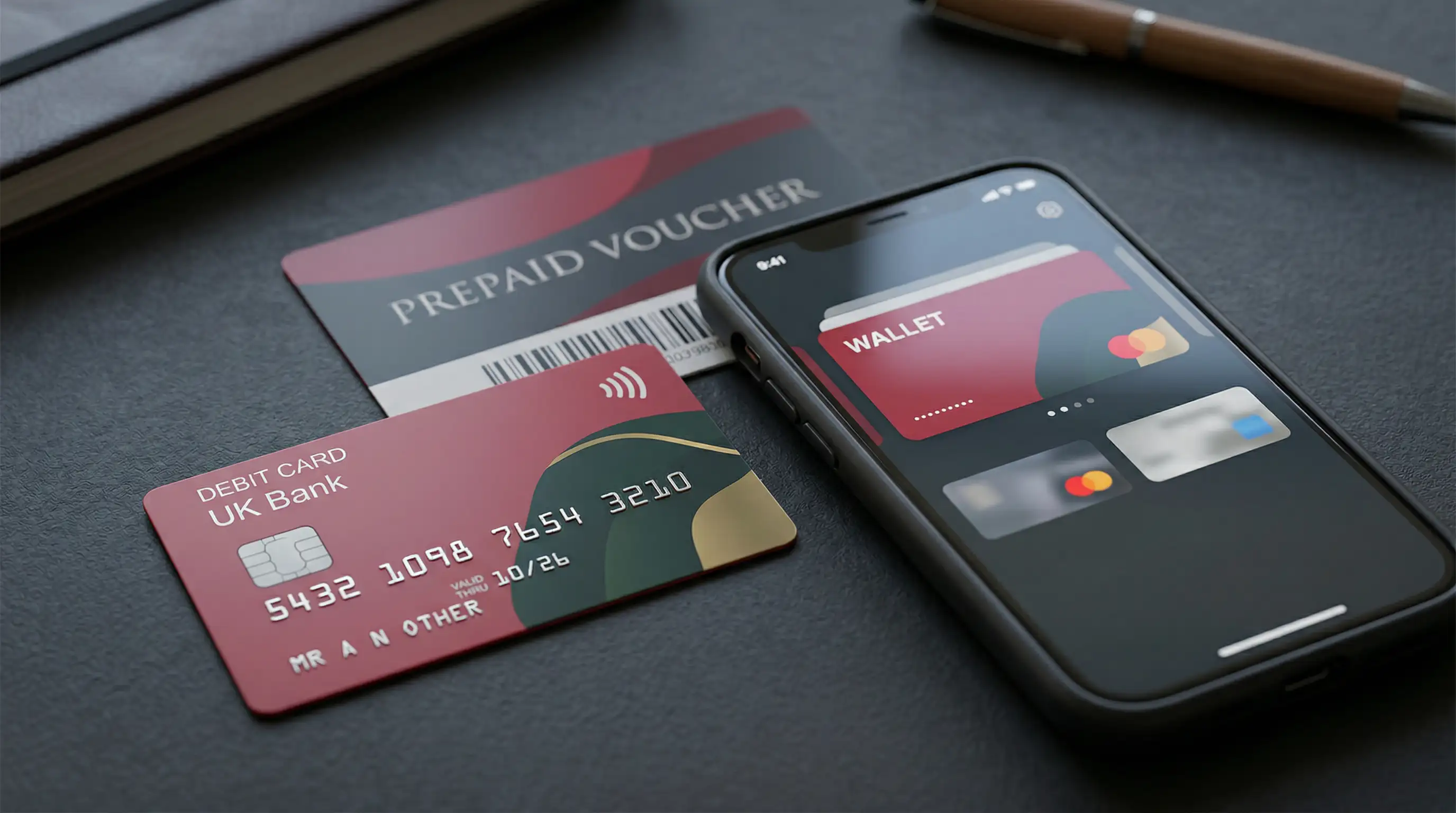
Comparing Processing Times for UK MMA Payment Methods
A reader who had been betting online in Germany moved to the UK in 2024 and asked why his usual deposit methods did not work on British sportsbooks. The answer is a combination of regulation, banking practice and consumer-protection framework that has deliberately narrowed UK payment options over the past decade. What looks like a limitation is mostly a protective design, and understanding what is available — and what is not — is the first step in setting up an account that works reliably for serious UFC betting.
Four payment methods cover essentially all UK-licensed MMA betting deposits in 2026: debit card, PayPal, Skrill, and Paysafecard. Bank transfer through Open Banking is the fifth, rising in prominence but still behind the four main options. Credit cards are banned. Cryptocurrency is generally unavailable on UK-licensed operators. Gift cards and prepaid non-Paysafecard products have been phased out. The UK payment landscape for MMA betting is small, predictable, and rigorously supervised.
This piece walks through each of the main options, the 2020 credit-card ban that reshaped the UK market, and the KYC and source-of-funds requirements that sit on top of whatever deposit method you choose. The broader regulatory context sits in the piece on UK MMA betting regulation; this piece is the operational plumbing layer beneath the regulation.
The 2020 Credit Card Ban and What It Means Today
The UKGC banned credit card deposits at UK-licensed gambling operators on 14 April 2020. The ban applied to all gambling products and all UK-licensed operators with no carve-outs. The policy rationale was straightforward: borrowing money to gamble was producing measurable consumer harm, and the UKGC’s harm-reduction responsibilities pushed toward blocking the payment rail rather than trying to regulate around it.
The ban is now fully normalised in UK gambling infrastructure. Every UK-licensed sportsbook checks incoming card deposits against BIN (bank identification number) databases to confirm the card is a debit card, not a credit card, and refuses credit-card transactions at the deposit gateway. If you attempt a credit-card deposit, the transaction declines with a message referencing the regulation rather than a generic failure.
The ban does have a single minor exception: e-wallets. A PayPal or Skrill account funded by a credit card can in principle deposit to a gambling site even though the underlying funding source is credit. UKGC guidance has tightened around this, and operators now check e-wallet transactions against funding-source flags where possible, but the loophole has not been perfectly closed. In practice, serious UK bettors should treat credit-card funding routes as off-limits regardless of whether a specific e-wallet transaction happens to succeed, because the underlying consumer-protection logic of the ban applies whether or not the specific pathway is technically blocked.
The practical consequence of the ban is that UK MMA betting operates on a cash-equivalent funding model. You can only deposit money you already have, not money you are borrowing from a card issuer. That changes the mental accounting around stakes in useful ways — you cannot stake against next month’s salary, cannot chase losses with borrowed capital, and cannot accumulate gambling-related debt on a credit line separate from your main betting activity. The ban is restrictive in a way that is structurally protective, and the evidence base for its continued operation is strong.
Debit Cards: The UK Default
UK debit cards — Visa Debit, Mastercard Debit, and the few remaining Maestro cards — cover the majority of UK MMA betting deposits. The processing is instant, the transaction is clean, and the audit trail is comprehensive enough to satisfy the KYC requirements every UK-licensed operator applies before accepting your first bet.
Deposit limits vary by operator and by account history. New accounts typically have deposit caps of £500 to £1,000 per transaction and £5,000 to £10,000 per month; established accounts with verified KYC can usually raise these ceilings through the operator’s customer service team. The per-transaction cap is the more restrictive of the two for most recreational bettors, and it rarely causes practical issues unless you are staking large sums on a single event.
Withdrawals to debit card work the same way in reverse, though with longer processing times. UK banking infrastructure clears card deposits instantly but returns withdrawals through the card issuer’s reverse-auth system, which typically takes one to three business days to appear in your account. Some operators use Faster Payments for card withdrawals on accounts with compatible cards, which reduces the timeline to same-day in many cases but is not universal across the industry.
One practical note. UK banks increasingly offer “gambling block” toggles that can be activated from the banking app. These blocks prevent all card transactions to merchants classified as gambling operators, regardless of the specific operator. If you have activated a gambling block — or if someone close to you has activated it on their own account and you are sharing financial infrastructure — card deposits to UK sportsbooks will fail even though the operator is fully licensed. The block is reversible but usually has a 48-hour cooling-off period before it releases, which is deliberately designed to introduce friction between the decision to resume gambling and the ability to act on it.
E-wallets and Vouchers: PayPal, Skrill, Paysafecard
Beyond debit cards, three e-wallet and voucher products dominate UK MMA betting deposits.
PayPal is the e-wallet with the widest UK operator coverage. Most tier-one and tier-two UK sportsbooks accept PayPal deposits and withdrawals. The advantage is the isolation layer between your main bank account and the gambling operator — your PayPal account is the visible counterparty rather than your bank directly. The disadvantage is that PayPal applies its own KYC and anti-money-laundering checks on top of whatever the operator runs, which can produce transaction delays or account limits that are invisible until they trigger. PayPal also occasionally restricts gambling-related transactions during operational reviews, leaving accounts temporarily unable to deposit or withdraw while the review completes.
Skrill is the UK sportsbook-focused e-wallet, more narrowly specialised than PayPal and more oriented around gambling use cases. The UK operator coverage is almost as wide as PayPal’s, and the transaction processing is typically faster because Skrill’s systems are optimised for gambling payment flows. The drawback is that Skrill charges small transaction fees on some operations — foreign-exchange conversions, certain withdrawal types — that PayPal typically waives. For UK-resident bettors operating entirely in sterling, the fee exposure is minimal.
Paysafecard is the voucher product — physical or digital prepaid vouchers you buy at retail locations or online, then redeem at the sportsbook. The advantage is complete separation from bank accounts: you buy the voucher with cash or card at a newsagent, enter the PIN at the operator, and deposit with no bank-to-operator trail. The disadvantage is that Paysafecard deposits cannot be withdrawn back to Paysafecard; any winnings have to be withdrawn through a different method, typically the bank account linked to the operator account’s profile. The one-way flow limits Paysafecard’s use as a general-purpose deposit method and restricts it to specific use cases like budget-controlled session spending.
All three products work under the UK-licensed operator regulatory framework. Age verification, source-of-funds checking and responsible-gambling tools apply regardless of which payment method you use. The 31 October 2025 deposit-limit prompt applies to new accounts funded by any method. The light-touch financial vulnerability check at £150 net monthly deposit applies whether the deposits came through debit card, PayPal, Skrill or Paysafecard. The payment method does not change the regulatory overlay.
Bank Transfer and Open Banking Deposits
Direct bank transfer has historically been a clumsy UK deposit method — manual setup, one to three business days to process, awkward reference codes — and has therefore been a minority route. Open Banking has changed this over the past three years, and bank transfer through Open Banking APIs is now available on a growing share of UK-licensed sportsbooks with instant processing that rivals debit card speeds.
Open Banking works by letting the operator request a payment directly from your bank account via a regulated API connection, which you authorise through your banking app or online banking login. The flow is essentially: operator requests payment, your bank app prompts you to approve, you approve, funds move instantly. No card number exchange, no voucher redemption, no e-wallet layer. The money moves directly between bank accounts with full audit trail and no intermediary.
The advantage for serious UK MMA bettors is reduced transaction friction and cleaner record-keeping. Your bank statement shows a single transaction per deposit rather than a card-processor transaction wrapped in merchant codes, and the reference description typically includes the operator name and amount clearly. For bettors who track CLV and P&L carefully, the cleaner statement output makes reconciliation more straightforward.
The disadvantage is that Open Banking deposits are still not universal across UK operators. Tier-one sportsbooks have mostly integrated the technology by 2026 but tier-two and tier-three operators lag behind. Check the deposit options on your preferred operator before assuming Open Banking is available; if it is not, debit card or PayPal are the default alternatives.
KYC, Source-of-Funds and Withdrawal Timings
KYC — Know Your Customer — is the regulatory requirement that operators verify your identity before allowing you to bet. Under UKGC LCCP rules, verification must complete before the first bet, not before the first withdrawal. The practical process is usually automated: operator cross-references your registration details against electoral roll and banking data, and if the cross-reference succeeds you are betting within minutes. If it fails, you are asked for photo ID and proof of address before the account becomes fully active.
Source-of-funds checks apply higher up the deposit scale. The light-touch financial vulnerability check that triggers at £150 net monthly deposit is usually invisible to the customer — it uses publicly available data rather than document submission. Heavier source-of-funds checks apply at higher deposit thresholds and can involve payslips, bank statements, employment confirmations or other documentation. The thresholds are operator-specific and typically tighten as aggregate deposit activity scales.
Withdrawal timings depend on the method. Debit card withdrawals typically settle in one to three business days. PayPal and Skrill withdrawals usually clear within 24 hours. Bank transfer through Open Banking clears same-day or next-day for UK banks. Paysafecard withdrawals do not exist — winnings on Paysafecard-funded accounts are withdrawn through an alternative method linked to the account profile, typically a bank transfer.
One common source of UK bettor frustration is withdrawal-hold delays on winning positions. UK-licensed operators occasionally delay withdrawals for additional KYC verification, particularly on larger wins on accounts that have not previously withdrawn significant amounts. The delays are usually 24 to 72 hours and resolve once the additional verification is complete. If a withdrawal delay extends beyond seven days without clear communication from the operator, the UKGC’s approved alternative dispute resolution providers — IBAS being the most common — can mediate. UK online gambling accounts total approximately 13.5 million monthly active users against a total market of 22.5 million UK adults who gamble in any form each month, and the infrastructure for handling payment disputes at that scale is robust when used properly.
Do any UK MMA bookmakers accept cryptocurrency deposits in 2026?
No UK-licensed operator accepts cryptocurrency deposits as of the current regulatory framework. The UKGC’s position is that cryptocurrency deposits carry AML and source-of-funds verification challenges that conflict with LCCP requirements, and no licensed operator has received approval to offer crypto payment rails. Any site offering crypto deposits to UK customers is operating outside the UK licensed regime, which carries the consumer-protection risks covered in the piece on whether UFC betting is legal in the UK.
Why are PayPal withdrawals from UK betting sites sometimes delayed beyond 24 hours?
Most PayPal withdrawal delays stem from either operator-side KYC re-verification on larger winning amounts or PayPal-side review of gambling-related transactions. The two layers operate independently, so a withdrawal can clear the operator’s checks and then delay at PayPal’s end, or vice versa. Delays typically resolve within 72 hours; if they extend beyond a week, contacting both the operator and PayPal directly usually surfaces the specific check that is holding the transaction.
Written by the editors at mma Betting Online.